
Dec 27, 2025
Study: Impact of Collaboration on Rural Agriculture
Sustainability Strategy
In This Article
Cooperatives, PPPs and agtech collaboration cut costs, boost resilience, and deliver economic, environmental, and social gains in rural agriculture.
Study: Impact of Collaboration on Rural Agriculture
Collaboration is reshaping rural agriculture, addressing challenges like declining productivity, limited resources, and climate change. By working together, farmers, governments, and private entities can share resources, reduce costs, and improve long-term outcomes. Key takeaways from the study include:
Collaboration Models: Informal networks, cooperatives, and public–private partnerships improve productivity and resilience.
Internal Organization Matters: Trust, leadership, and resource-sharing are more critical to success than external factors like market prices or weather.
Economic Gains: Shared equipment and collective bargaining reduce costs and open new revenue streams.
Environmental Improvements: Coordinated actions across regions reduce habitat fragmentation and improve resource management.
Social Benefits: Knowledge-sharing and community trust strengthen rural networks.
Examples include the USDA's $3.1 billion investment in climate-smart projects, water management cooperatives in the U.S., and tech-driven tools like FarmerSupport apps, which have helped farmers cut costs by 50%. Collaboration at all levels is proving essential for creating sustainable, resilient agricultural systems.
Transformative Partnerships for Sustainable Agriculture
How Agricultural Collaboration Has Evolved
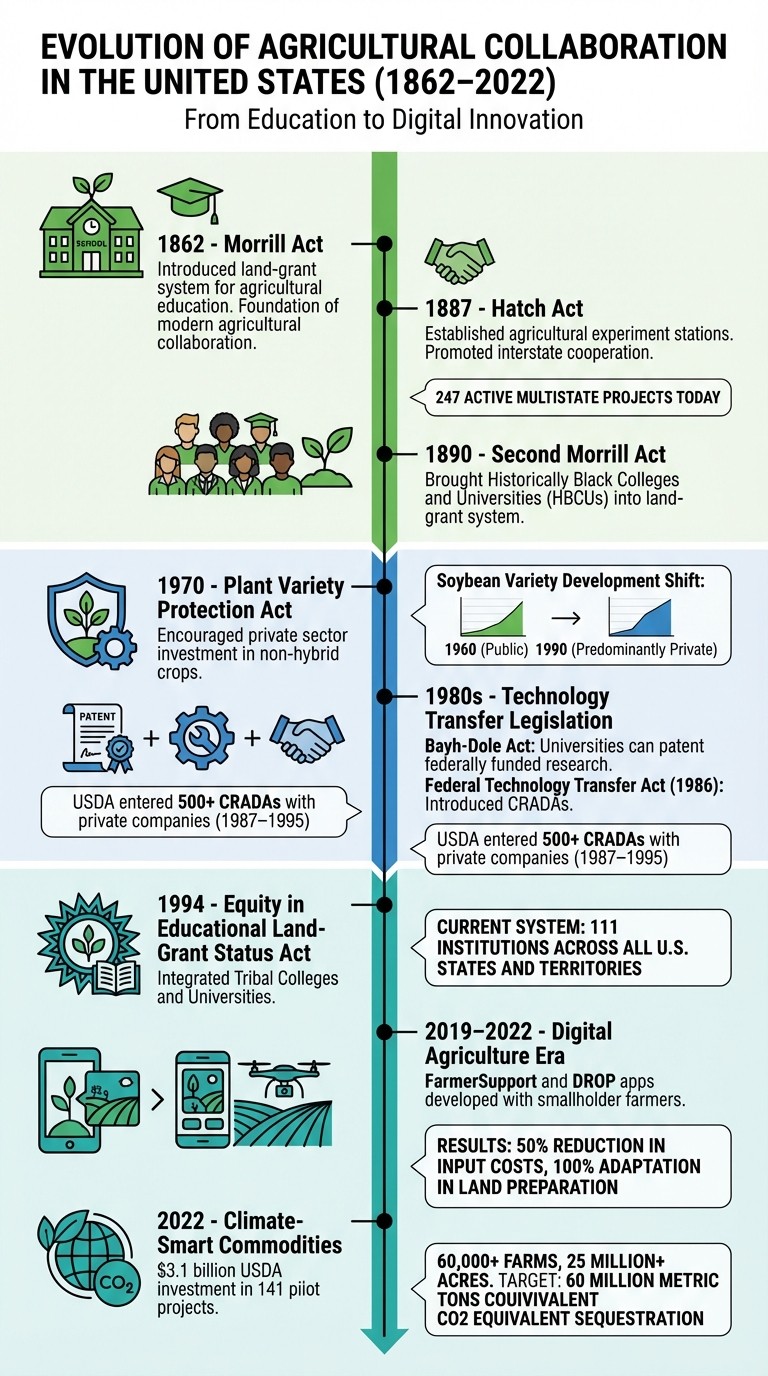
Evolution of Agricultural Collaboration in the United States 1862-2022
Looking at the history of agricultural partnerships, it’s clear that collaboration in this field has undergone a steady and impactful transformation over time.
Major Agricultural Partnerships Through History
The roots of modern agricultural collaboration trace back to 1862 with the Morrill Act, which introduced the land-grant system to make agricultural education more accessible. This effort gained momentum with the Hatch Act of 1887, which established agricultural experiment stations to promote interstate cooperation. Today, this network supports 247 active multistate projects, serving as a vital framework for agricultural research and development[4].
Over the years, the system expanded to become more inclusive. The 1890 Act brought Historically Black Colleges and Universities (HBCUs) into the land-grant fold, while the 1994 Act integrated Tribal Colleges and Universities. Currently, the land-grant system spans 111 institutions across all U.S. states and territories[4]. However, inclusion hasn’t always translated into equitable support. For instance, in 2020, 10 out of 19 Historically Black land-grant institutions missed out on $21 million in state-matching funds due to shortfalls in funding[4].
The 1980s marked a significant shift with legislation that reshaped public–private research partnerships. The Bayh-Dole Act allowed universities to patent federally funded research, and the Federal Technology Transfer Act of 1986 introduced Cooperative Research and Development Agreements (CRADAs). Between 1987 and 1995, the USDA entered into over 500 CRADAs with private companies[5].
One standout example is the Genetic Enhancement for Maize (GEM) Initiative. This consortium, involving federal agencies, state institutions, and over 20 private seed companies, aimed to introduce new traits from exotic germplasm into commercial corn varieties. Despite being competitors, the participants shared research and varietal crosses while maintaining their commercial independence[5].
Another remarkable collaboration was the development of Taxol, a cancer drug derived from the Pacific yew tree. The National Cancer Institute partnered with Bristol-Myers Squibb under a CRADA to commercialize the drug. This partnership combined clinical research with marketing expertise and secured harvesting rights through sub-agreements. By 1992, the U.S. Food and Drug Administration approved Taxol, and the collaboration later developed alternative production methods to conserve natural resources[5].
Changes in Collaboration Models
Initially, agricultural partnerships focused on increasing crop yields. However, as environmental and societal challenges grew, the nature of collaboration shifted. A turning point came with the Plant Variety Protection Act of 1970, which encouraged private sector investment in non-hybrid crops. This led to a dramatic change in the development of new soybean varieties - from being almost entirely public-sector-driven in 1960 to predominantly private-sector-led by 1990[5].
This evolution created a division of roles: public agricultural research now dedicates nearly half (47.3%) of its budget to basic research, which explores foundational science without immediate commercial applications. Meanwhile, the private sector allocates 41.5% of its budget to developmental research, focusing on market-ready innovations[5]. As the USDA Economic Research Service explains:
A principal objective of a CRADA is to link the fundamental, or pre-technology, research capacity of Federal laboratories with the commercial research and marketing expertise of the private sector[5]
Modern partnerships have moved beyond the older "parallel path" model, embracing "convergent" approaches that integrate fields like data science, gene editing, and systems science. These methods tackle complex challenges such as climate change and resource management[4]. One such example is the Michigan Inter-Tribal Land Grant Extension System (MILES), which fosters collaboration between 1862 and 1994 land-grant institutions to build trust and deliver shared benefits for state universities and tribal communities[4].
Today, agricultural collaborations aim to do more than just maximize yields. The focus has shifted toward building resilience across the entire system. Partnerships now emphasize sustainable intensification - boosting production while reducing environmental impacts and improving rural livelihoods. These shifts in legislation and research priorities form the foundation of strategies that balance profitability with sustainability, underscoring the evolution from yield-focused efforts to a broader, system-wide approach.
Case Studies: Collaborative Models That Work
Practical partnerships are making a real difference in rural agriculture by bringing together government entities, industry leaders, farmers, and local communities.
Public-Private Partnerships
One standout example is the USDA Partnerships for Climate-Smart Commodities, which represents a massive investment in collaborative agriculture. Between September and December 2022, Secretary Tom Vilsack announced $3.1 billion in funding for 141 pilot projects lasting from one to five years. These initiatives bring together 100 universities (including over 30 minority-serving institutions), more than 20 tribal groups, and private partners [6][8].
The projects aim to sequester over 60 million metric tons of carbon dioxide equivalent, while engaging more than 60,000 farms and covering over 25 million acres of working land. Practices like cover cropping, no-till farming, and nutrient management are central to these efforts. On average, project proposals plan to match 50% of the federal funding with non-federal contributions [6]. These partnerships not only improve agricultural productivity but also strengthen ecosystems.
Another model, the Regional Conservation Partnership Program (RCPP), shifts control to its partners. The government co-invests with private stakeholders to tackle natural resource challenges on agricultural land. Funding is split evenly between “Critical Conservation Areas” and “State/Multistate” funding pools [7]. The USDA Natural Resources Conservation Service highlights the program's effectiveness:
By leveraging collective resources and collaborating on common goals, RCPP demonstrates public-private partnerships' ability to deliver agricultural and conservation results [7].
Private companies also drive impactful collaborations. For instance, BASF and Syngenta have joined forces for the "Wage Improvements in Seed Hybrids" (WISH) initiative, addressing labor standards and child labor in agricultural supply chains. According to BASF Agricultural Solutions:
Collaboration drives sustainable agriculture, helping farmers produce nutritious food while protecting resources [9].
These examples illustrate how partnerships can pool resources and expertise, creating a foundation for shared governance in agriculture.
Agricultural Cooperatives
Cooperatives give farmers a structured way to collaborate and share resources. In Tyrrell County, North Carolina, an ecotourism committee brought together 29 organizations and 66 individuals to promote the region's natural resources. Despite economic hurdles, their efforts generated $3.46 million in tourism revenue in 2013 [1].
Water management cooperatives are another example, particularly in areas with limited water resources. Groups like ditch companies oversee surface irrigation systems through boards and "ditch bosses", ensuring fair distribution [2]. In Nebraska, Natural Resources Districts (NRDs) let farmers take on elected board roles to set water quality and quantity standards at the river basin level [2].
Research underscores the importance of achieving early "small wins" to build trust and momentum. Success often depends on "local champions" - leaders embedded within communities who mobilize networks without creating dependency on outside organizations [1]. Interestingly, only about 2.5% of a community are "innovators" willing to embrace new ideas right away, while 68% (the "majority") prefer to see proof of success before they join in [1].
As traditional cooperative models evolve, digital platforms are emerging as powerful tools for collaboration in agriculture.
Technology-Enabled Collaborations
Digital tools are reshaping how farmers, researchers, and extension officers work together. Between 2019 and 2022, smallholder farmers in Bangladesh, Ghana, and Guatemala teamed up with researchers to develop and test the FarmerSupport (FSapp) and DROP apps. These platforms allowed farmers to merge their local ecological observations - like animal behavior and plant flowering - with scientific weather models [10].
In Bangladesh, the results were striking: 100% of farmers adapted their land preparation, 97% adjusted seeding and fertilizer applications, and 86% changed harvest dates based on app data. Input costs for items like fertilizer and pesticides dropped by 50%, and 89% of farmers revised their irrigation schedules [10]. These adjustments helped farmers manage risks more effectively and adopt sustainable practices.
On a larger scale, technology is revolutionizing environmental monitoring. The USDA Partnerships for Climate-Smart Commodities initiative incorporates advanced systems to measure, monitor, and verify greenhouse gas benefits across over 25 million acres of farmland [6]. These tools ensure transparency and accountability, which are critical to maintaining strong public-private partnerships.
Farmers involved in these technology-driven projects expressed a greater sense of value, noting that their input was integral to developing forecasts rather than simply receiving pre-made recommendations [10].
Measured Results of Collaboration in Rural Agriculture
Evidence highlights how collaboration delivers measurable financial, environmental, and social advantages within rural agricultural systems.
Economic Benefits
Collaborative efforts in rural agriculture offer clear financial advantages by leveraging shared resources and collective bargaining. Farmers who join forces to share equipment, labor, and infrastructure can significantly cut costs while gaining access to markets and pricing opportunities that might otherwise be unattainable. Additionally, such groups are better positioned to secure grants and financial backing from NGOs and donor organizations [3].
Take the Upländer Farmer Dairy cooperative in Germany, for example. Founded in 1986 with just eight organic dairy farmers, the cooperative grew to 130 members by 2008. This expansion not only resulted in higher milk prices for its members but also significantly boosted overall revenue [3]. Studies show that internal factors like effective organization and management often play a bigger role in economic success than external market conditions [3].
Collaboration also opens up new revenue streams beyond traditional farming. Initiatives like craft brewery trails and regional food festivals bring in tourism dollars, providing farmers with supplementary income [3][1]. These economic gains often create opportunities for meaningful environmental improvements as well.
Environmental Benefits
When farmers collaborate, they can address environmental issues on a larger scale, aligning their efforts with natural processes. Instead of treating individual fields as isolated units, coordinated actions across watersheds can improve habitat connectivity and reduce ecosystem fragmentation. A meta-analysis of 30 case studies across the European Union revealed that collaboration effectively reduces habitat fragmentation and delivers measurable ecological benefits [3].
In the United States, collaborative environmental management has been instrumental in tackling challenges such as agricultural runoff. Different states employ tailored approaches: Arizona uses ditch boards and environmental NGOs for groundwater management, Nebraska relies on Natural Resources Districts to oversee water quality and quantity, and Pennsylvania implements conservation districts to protect the Chesapeake Bay watershed [2].
Pooling knowledge among farmers also leads to better sustainable practices. By sharing insights tailored to local conditions, farmers develop solutions that are both scientifically reliable and practical. This approach is often more effective than top-down regulations, as farmers are more likely to adopt practices when they see positive results from trusted peers [2]. These environmental successes, in turn, strengthen the resilience of rural communities.
Social Benefits
Collaboration fosters stronger rural communities by building relationships that extend beyond specific projects. It enhances social capital - the trust and networks that help communities thrive. Collaborative models create a "social glue" that encourages mutual support among community members [3].
One of the most impactful social outcomes is knowledge sharing. When farmers collaborate, they combine technical skills and expertise, ensuring that resources and knowledge are fully utilized [3][11]. This collective learning benefits individuals and spreads successful practices throughout the community.
Trust, a key ingredient in collaboration, grows through meaningful, personal interactions rather than formal organizational ties. These relationships build empathy and motivation that persist long after a project ends. Research shows that successful collaborations often begin with "small wins" on simpler issues, which lay the groundwork for addressing more complex challenges later [1]. Early victories help establish trust and inspire broader community involvement.
Recommendations for Rural Development
Achieving impactful rural development requires strategies that bring stakeholders together with a shared sense of purpose. The difference between fleeting partnerships and those that leave a lasting impact lies in the ability to align actions across multiple fronts.
Systems Thinking for Regenerative Agriculture
Effective rural development addresses interconnected challenges by linking education, technology, and social norms. A compelling example comes from a county in North Carolina, where integrated efforts generated $3.46 million in tourism revenue [1]. This success stemmed from addressing multiple areas at once, including environmental preservation and economic growth, rather than tackling issues in isolation.
A meta-analysis of 30 case studies reveals that internal organization and shared knowledge are decisive factors for success [3]. This highlights the power rural communities hold in shaping their futures. Building trust, fostering shared knowledge, and establishing common norms are critical steps toward achieving meaningful progress [13].
Regenerative agriculture thrives on coordination at the landscape level. While individual farm improvements are valuable, broader environmental processes - such as water cycles and habitat connectivity - demand collaboration across property lines. The Parish Grasslands Project in Monmouthshire, UK, offers a clear example. Beginning in 2001, this initiative brought together local residents to conduct field-by-field surveys and provide community education. Their work helped smallholders preserve semi-natural grasslands, effectively blending biodiversity conservation with sustainable farming [3]. The project succeeded because it united practices across multiple properties, treating the landscape as a shared resource rather than a collection of isolated plots.
These principles of systems thinking form the foundation for innovative models like those developed by Council Fire.
Council Fire's Approach to Collaboration

Council Fire exemplifies how systems thinking can be translated into practical, measurable outcomes. Through their work, they show how to build shared knowledge, trust, and unified frameworks - key ingredients for enduring collaboration.
Addressing power imbalances and fostering mutual interests are central to effective engagement [2]. Council Fire's stakeholder-centered planning helps organizations navigate these complexities, enabling partnerships that go beyond individual contributions. Research supports this approach, showing that farmers are 40% more likely to adopt new practices when those practices are tested in real-world scenarios rather than controlled environments [12]. Additionally, about 88% of farmers view on-farm research as a vital way to build stronger connections between producers and academic institutions.
Council Fire’s ability to turn ambitious sustainability goals into actionable strategies reflects findings that internal organization and management play a more critical role in success than starting conditions [3]. By blending technical expertise with strategic communication, they help rural agricultural communities create the "social glue" of trust and shared purpose - elements that research consistently identifies as essential for long-term collaboration.
Conclusion: Collaboration as a Path Forward for Rural Agriculture
Collaboration has the power to reshape rural agriculture into a well-coordinated network capable of delivering measurable benefits across economic, environmental, and social dimensions. When farmers, organizations, and communities join forces on a larger, landscape level, they can unlock opportunities that go beyond what any single entity could achieve - like expanding local market access or safeguarding biodiversity that spans multiple properties.
The success of these collaborative models doesn’t depend on perfect starting conditions but rather on effective management and shared commitment. Studies show that internal factors such as strong organization, good management practices, and collective knowledge are far more influential than external circumstances. This means rural communities can take control of their futures through deliberate and thoughtful collaboration [3].
However, there are real challenges to overcome. Addressing power imbalances is crucial to ensure that all stakeholders, including historically marginalized groups, have an equal voice and role in decision-making [2]. Building trust is another key element, often beginning with informal interactions and small, tangible successes that prove the value of working together before scaling up to broader community efforts [1].
The interconnected challenges faced by rural agricultural communities demand solutions that are equally interconnected. Examples like cooperatives and landscape-scale initiatives consistently show that partnerships and collective action deliver better results than isolated efforts. These lessons make it clear: intentional and well-managed collaboration is the way forward for sustainable rural development. The question isn’t whether collaboration works - it’s how to speed up its adoption and implementation.
FAQs
How do cooperatives and public-private partnerships benefit rural agriculture?
Collaboration through cooperatives and public-private partnerships (PPPs) plays a crucial role in strengthening rural agriculture by combining resources, fostering knowledge exchange, and amplifying collective bargaining power. Cooperatives empower farmers by opening doors to better market opportunities, enabling them to negotiate fairer prices and streamline operations through shared tools, infrastructure, and processing facilities. On the other hand, PPPs bring together federal agencies, private agribusinesses, and local stakeholders to provide essential resources like research, credit, and infrastructure. This connection helps small farmers embrace new practices and access larger supply chains.
The success of these models hinges on clear governance, dependable funding, and supportive policies. Programs like USDA-funded initiatives highlight how collaborative planning can uplift rural economies by increasing incomes and creating jobs. Organizations like Council Fire contribute by crafting strategies that align financial objectives with social and environmental priorities, ensuring these efforts deliver sustainable benefits for rural communities.
What internal factors drive the success of agricultural collaborations in rural areas?
Successful agricultural collaborations thrive when certain internal factors come together. At the forefront is the need for a clear, shared vision and mutually agreed-upon goals. This alignment ensures all participants are moving in the same direction with a unified purpose. Equally vital is transparent leadership and decision-making, which help clarify roles and responsibilities while keeping everyone accountable.
Another cornerstone is effective communication and trust. When participants engage in open dialogue and demonstrate mutual respect, it fosters an environment where diverse perspectives can be shared, challenges addressed, and solutions developed collaboratively. Moreover, capacity building and stakeholder engagement - whether through dedicating time, sharing resources, or encouraging inclusive participation - play a critical role in strengthening partnerships and achieving meaningful progress.
These interconnected elements form the backbone of successful partnerships in rural agricultural ecosystems, paving the way for improved outcomes that benefit both communities and their surrounding environments.
How is technology improving collaboration and outcomes in agriculture?
Technology is reshaping how agricultural communities work together, making it easier for farmers, researchers, and other stakeholders to share real-time data and insights. Tools like satellite imagery, farm management software, and smart sensors are proving invaluable in tackling issues like soil health, water management, and pest control. These advancements simplify decision-making and encourage collaborative, community-driven solutions.
Research shows that these technologies do more than just boost productivity - they also build trust among collaborators. Transparent data-sharing practices and inclusive participation empower all stakeholders to play an active role. By adopting these tools, agricultural communities are not only improving efficiency but also embracing sustainable practices, strengthening resilience, and achieving better economic and environmental results.
Related Blog Posts
Latest Articles
©2025



FAQ
01
What does it really mean to “redefine profit”?
02
What makes Council Fire different?
03
Who does Council Fire you work with?
04
What does working with Council Fire actually look like?
05
How does Council Fire help organizations turn big goals into action?
06
How does Council Fire define and measure success?
Dec 27, 2025
Study: Impact of Collaboration on Rural Agriculture
Sustainability Strategy
In This Article
Cooperatives, PPPs and agtech collaboration cut costs, boost resilience, and deliver economic, environmental, and social gains in rural agriculture.
Study: Impact of Collaboration on Rural Agriculture
Collaboration is reshaping rural agriculture, addressing challenges like declining productivity, limited resources, and climate change. By working together, farmers, governments, and private entities can share resources, reduce costs, and improve long-term outcomes. Key takeaways from the study include:
Collaboration Models: Informal networks, cooperatives, and public–private partnerships improve productivity and resilience.
Internal Organization Matters: Trust, leadership, and resource-sharing are more critical to success than external factors like market prices or weather.
Economic Gains: Shared equipment and collective bargaining reduce costs and open new revenue streams.
Environmental Improvements: Coordinated actions across regions reduce habitat fragmentation and improve resource management.
Social Benefits: Knowledge-sharing and community trust strengthen rural networks.
Examples include the USDA's $3.1 billion investment in climate-smart projects, water management cooperatives in the U.S., and tech-driven tools like FarmerSupport apps, which have helped farmers cut costs by 50%. Collaboration at all levels is proving essential for creating sustainable, resilient agricultural systems.
Transformative Partnerships for Sustainable Agriculture
How Agricultural Collaboration Has Evolved
Evolution of Agricultural Collaboration in the United States 1862-2022
Looking at the history of agricultural partnerships, it’s clear that collaboration in this field has undergone a steady and impactful transformation over time.
Major Agricultural Partnerships Through History
The roots of modern agricultural collaboration trace back to 1862 with the Morrill Act, which introduced the land-grant system to make agricultural education more accessible. This effort gained momentum with the Hatch Act of 1887, which established agricultural experiment stations to promote interstate cooperation. Today, this network supports 247 active multistate projects, serving as a vital framework for agricultural research and development[4].
Over the years, the system expanded to become more inclusive. The 1890 Act brought Historically Black Colleges and Universities (HBCUs) into the land-grant fold, while the 1994 Act integrated Tribal Colleges and Universities. Currently, the land-grant system spans 111 institutions across all U.S. states and territories[4]. However, inclusion hasn’t always translated into equitable support. For instance, in 2020, 10 out of 19 Historically Black land-grant institutions missed out on $21 million in state-matching funds due to shortfalls in funding[4].
The 1980s marked a significant shift with legislation that reshaped public–private research partnerships. The Bayh-Dole Act allowed universities to patent federally funded research, and the Federal Technology Transfer Act of 1986 introduced Cooperative Research and Development Agreements (CRADAs). Between 1987 and 1995, the USDA entered into over 500 CRADAs with private companies[5].
One standout example is the Genetic Enhancement for Maize (GEM) Initiative. This consortium, involving federal agencies, state institutions, and over 20 private seed companies, aimed to introduce new traits from exotic germplasm into commercial corn varieties. Despite being competitors, the participants shared research and varietal crosses while maintaining their commercial independence[5].
Another remarkable collaboration was the development of Taxol, a cancer drug derived from the Pacific yew tree. The National Cancer Institute partnered with Bristol-Myers Squibb under a CRADA to commercialize the drug. This partnership combined clinical research with marketing expertise and secured harvesting rights through sub-agreements. By 1992, the U.S. Food and Drug Administration approved Taxol, and the collaboration later developed alternative production methods to conserve natural resources[5].
Changes in Collaboration Models
Initially, agricultural partnerships focused on increasing crop yields. However, as environmental and societal challenges grew, the nature of collaboration shifted. A turning point came with the Plant Variety Protection Act of 1970, which encouraged private sector investment in non-hybrid crops. This led to a dramatic change in the development of new soybean varieties - from being almost entirely public-sector-driven in 1960 to predominantly private-sector-led by 1990[5].
This evolution created a division of roles: public agricultural research now dedicates nearly half (47.3%) of its budget to basic research, which explores foundational science without immediate commercial applications. Meanwhile, the private sector allocates 41.5% of its budget to developmental research, focusing on market-ready innovations[5]. As the USDA Economic Research Service explains:
A principal objective of a CRADA is to link the fundamental, or pre-technology, research capacity of Federal laboratories with the commercial research and marketing expertise of the private sector[5]
Modern partnerships have moved beyond the older "parallel path" model, embracing "convergent" approaches that integrate fields like data science, gene editing, and systems science. These methods tackle complex challenges such as climate change and resource management[4]. One such example is the Michigan Inter-Tribal Land Grant Extension System (MILES), which fosters collaboration between 1862 and 1994 land-grant institutions to build trust and deliver shared benefits for state universities and tribal communities[4].
Today, agricultural collaborations aim to do more than just maximize yields. The focus has shifted toward building resilience across the entire system. Partnerships now emphasize sustainable intensification - boosting production while reducing environmental impacts and improving rural livelihoods. These shifts in legislation and research priorities form the foundation of strategies that balance profitability with sustainability, underscoring the evolution from yield-focused efforts to a broader, system-wide approach.
Case Studies: Collaborative Models That Work
Practical partnerships are making a real difference in rural agriculture by bringing together government entities, industry leaders, farmers, and local communities.
Public-Private Partnerships
One standout example is the USDA Partnerships for Climate-Smart Commodities, which represents a massive investment in collaborative agriculture. Between September and December 2022, Secretary Tom Vilsack announced $3.1 billion in funding for 141 pilot projects lasting from one to five years. These initiatives bring together 100 universities (including over 30 minority-serving institutions), more than 20 tribal groups, and private partners [6][8].
The projects aim to sequester over 60 million metric tons of carbon dioxide equivalent, while engaging more than 60,000 farms and covering over 25 million acres of working land. Practices like cover cropping, no-till farming, and nutrient management are central to these efforts. On average, project proposals plan to match 50% of the federal funding with non-federal contributions [6]. These partnerships not only improve agricultural productivity but also strengthen ecosystems.
Another model, the Regional Conservation Partnership Program (RCPP), shifts control to its partners. The government co-invests with private stakeholders to tackle natural resource challenges on agricultural land. Funding is split evenly between “Critical Conservation Areas” and “State/Multistate” funding pools [7]. The USDA Natural Resources Conservation Service highlights the program's effectiveness:
By leveraging collective resources and collaborating on common goals, RCPP demonstrates public-private partnerships' ability to deliver agricultural and conservation results [7].
Private companies also drive impactful collaborations. For instance, BASF and Syngenta have joined forces for the "Wage Improvements in Seed Hybrids" (WISH) initiative, addressing labor standards and child labor in agricultural supply chains. According to BASF Agricultural Solutions:
Collaboration drives sustainable agriculture, helping farmers produce nutritious food while protecting resources [9].
These examples illustrate how partnerships can pool resources and expertise, creating a foundation for shared governance in agriculture.
Agricultural Cooperatives
Cooperatives give farmers a structured way to collaborate and share resources. In Tyrrell County, North Carolina, an ecotourism committee brought together 29 organizations and 66 individuals to promote the region's natural resources. Despite economic hurdles, their efforts generated $3.46 million in tourism revenue in 2013 [1].
Water management cooperatives are another example, particularly in areas with limited water resources. Groups like ditch companies oversee surface irrigation systems through boards and "ditch bosses", ensuring fair distribution [2]. In Nebraska, Natural Resources Districts (NRDs) let farmers take on elected board roles to set water quality and quantity standards at the river basin level [2].
Research underscores the importance of achieving early "small wins" to build trust and momentum. Success often depends on "local champions" - leaders embedded within communities who mobilize networks without creating dependency on outside organizations [1]. Interestingly, only about 2.5% of a community are "innovators" willing to embrace new ideas right away, while 68% (the "majority") prefer to see proof of success before they join in [1].
As traditional cooperative models evolve, digital platforms are emerging as powerful tools for collaboration in agriculture.
Technology-Enabled Collaborations
Digital tools are reshaping how farmers, researchers, and extension officers work together. Between 2019 and 2022, smallholder farmers in Bangladesh, Ghana, and Guatemala teamed up with researchers to develop and test the FarmerSupport (FSapp) and DROP apps. These platforms allowed farmers to merge their local ecological observations - like animal behavior and plant flowering - with scientific weather models [10].
In Bangladesh, the results were striking: 100% of farmers adapted their land preparation, 97% adjusted seeding and fertilizer applications, and 86% changed harvest dates based on app data. Input costs for items like fertilizer and pesticides dropped by 50%, and 89% of farmers revised their irrigation schedules [10]. These adjustments helped farmers manage risks more effectively and adopt sustainable practices.
On a larger scale, technology is revolutionizing environmental monitoring. The USDA Partnerships for Climate-Smart Commodities initiative incorporates advanced systems to measure, monitor, and verify greenhouse gas benefits across over 25 million acres of farmland [6]. These tools ensure transparency and accountability, which are critical to maintaining strong public-private partnerships.
Farmers involved in these technology-driven projects expressed a greater sense of value, noting that their input was integral to developing forecasts rather than simply receiving pre-made recommendations [10].
Measured Results of Collaboration in Rural Agriculture
Evidence highlights how collaboration delivers measurable financial, environmental, and social advantages within rural agricultural systems.
Economic Benefits
Collaborative efforts in rural agriculture offer clear financial advantages by leveraging shared resources and collective bargaining. Farmers who join forces to share equipment, labor, and infrastructure can significantly cut costs while gaining access to markets and pricing opportunities that might otherwise be unattainable. Additionally, such groups are better positioned to secure grants and financial backing from NGOs and donor organizations [3].
Take the Upländer Farmer Dairy cooperative in Germany, for example. Founded in 1986 with just eight organic dairy farmers, the cooperative grew to 130 members by 2008. This expansion not only resulted in higher milk prices for its members but also significantly boosted overall revenue [3]. Studies show that internal factors like effective organization and management often play a bigger role in economic success than external market conditions [3].
Collaboration also opens up new revenue streams beyond traditional farming. Initiatives like craft brewery trails and regional food festivals bring in tourism dollars, providing farmers with supplementary income [3][1]. These economic gains often create opportunities for meaningful environmental improvements as well.
Environmental Benefits
When farmers collaborate, they can address environmental issues on a larger scale, aligning their efforts with natural processes. Instead of treating individual fields as isolated units, coordinated actions across watersheds can improve habitat connectivity and reduce ecosystem fragmentation. A meta-analysis of 30 case studies across the European Union revealed that collaboration effectively reduces habitat fragmentation and delivers measurable ecological benefits [3].
In the United States, collaborative environmental management has been instrumental in tackling challenges such as agricultural runoff. Different states employ tailored approaches: Arizona uses ditch boards and environmental NGOs for groundwater management, Nebraska relies on Natural Resources Districts to oversee water quality and quantity, and Pennsylvania implements conservation districts to protect the Chesapeake Bay watershed [2].
Pooling knowledge among farmers also leads to better sustainable practices. By sharing insights tailored to local conditions, farmers develop solutions that are both scientifically reliable and practical. This approach is often more effective than top-down regulations, as farmers are more likely to adopt practices when they see positive results from trusted peers [2]. These environmental successes, in turn, strengthen the resilience of rural communities.
Social Benefits
Collaboration fosters stronger rural communities by building relationships that extend beyond specific projects. It enhances social capital - the trust and networks that help communities thrive. Collaborative models create a "social glue" that encourages mutual support among community members [3].
One of the most impactful social outcomes is knowledge sharing. When farmers collaborate, they combine technical skills and expertise, ensuring that resources and knowledge are fully utilized [3][11]. This collective learning benefits individuals and spreads successful practices throughout the community.
Trust, a key ingredient in collaboration, grows through meaningful, personal interactions rather than formal organizational ties. These relationships build empathy and motivation that persist long after a project ends. Research shows that successful collaborations often begin with "small wins" on simpler issues, which lay the groundwork for addressing more complex challenges later [1]. Early victories help establish trust and inspire broader community involvement.
Recommendations for Rural Development
Achieving impactful rural development requires strategies that bring stakeholders together with a shared sense of purpose. The difference between fleeting partnerships and those that leave a lasting impact lies in the ability to align actions across multiple fronts.
Systems Thinking for Regenerative Agriculture
Effective rural development addresses interconnected challenges by linking education, technology, and social norms. A compelling example comes from a county in North Carolina, where integrated efforts generated $3.46 million in tourism revenue [1]. This success stemmed from addressing multiple areas at once, including environmental preservation and economic growth, rather than tackling issues in isolation.
A meta-analysis of 30 case studies reveals that internal organization and shared knowledge are decisive factors for success [3]. This highlights the power rural communities hold in shaping their futures. Building trust, fostering shared knowledge, and establishing common norms are critical steps toward achieving meaningful progress [13].
Regenerative agriculture thrives on coordination at the landscape level. While individual farm improvements are valuable, broader environmental processes - such as water cycles and habitat connectivity - demand collaboration across property lines. The Parish Grasslands Project in Monmouthshire, UK, offers a clear example. Beginning in 2001, this initiative brought together local residents to conduct field-by-field surveys and provide community education. Their work helped smallholders preserve semi-natural grasslands, effectively blending biodiversity conservation with sustainable farming [3]. The project succeeded because it united practices across multiple properties, treating the landscape as a shared resource rather than a collection of isolated plots.
These principles of systems thinking form the foundation for innovative models like those developed by Council Fire.
Council Fire's Approach to Collaboration
Council Fire exemplifies how systems thinking can be translated into practical, measurable outcomes. Through their work, they show how to build shared knowledge, trust, and unified frameworks - key ingredients for enduring collaboration.
Addressing power imbalances and fostering mutual interests are central to effective engagement [2]. Council Fire's stakeholder-centered planning helps organizations navigate these complexities, enabling partnerships that go beyond individual contributions. Research supports this approach, showing that farmers are 40% more likely to adopt new practices when those practices are tested in real-world scenarios rather than controlled environments [12]. Additionally, about 88% of farmers view on-farm research as a vital way to build stronger connections between producers and academic institutions.
Council Fire’s ability to turn ambitious sustainability goals into actionable strategies reflects findings that internal organization and management play a more critical role in success than starting conditions [3]. By blending technical expertise with strategic communication, they help rural agricultural communities create the "social glue" of trust and shared purpose - elements that research consistently identifies as essential for long-term collaboration.
Conclusion: Collaboration as a Path Forward for Rural Agriculture
Collaboration has the power to reshape rural agriculture into a well-coordinated network capable of delivering measurable benefits across economic, environmental, and social dimensions. When farmers, organizations, and communities join forces on a larger, landscape level, they can unlock opportunities that go beyond what any single entity could achieve - like expanding local market access or safeguarding biodiversity that spans multiple properties.
The success of these collaborative models doesn’t depend on perfect starting conditions but rather on effective management and shared commitment. Studies show that internal factors such as strong organization, good management practices, and collective knowledge are far more influential than external circumstances. This means rural communities can take control of their futures through deliberate and thoughtful collaboration [3].
However, there are real challenges to overcome. Addressing power imbalances is crucial to ensure that all stakeholders, including historically marginalized groups, have an equal voice and role in decision-making [2]. Building trust is another key element, often beginning with informal interactions and small, tangible successes that prove the value of working together before scaling up to broader community efforts [1].
The interconnected challenges faced by rural agricultural communities demand solutions that are equally interconnected. Examples like cooperatives and landscape-scale initiatives consistently show that partnerships and collective action deliver better results than isolated efforts. These lessons make it clear: intentional and well-managed collaboration is the way forward for sustainable rural development. The question isn’t whether collaboration works - it’s how to speed up its adoption and implementation.
FAQs
How do cooperatives and public-private partnerships benefit rural agriculture?
Collaboration through cooperatives and public-private partnerships (PPPs) plays a crucial role in strengthening rural agriculture by combining resources, fostering knowledge exchange, and amplifying collective bargaining power. Cooperatives empower farmers by opening doors to better market opportunities, enabling them to negotiate fairer prices and streamline operations through shared tools, infrastructure, and processing facilities. On the other hand, PPPs bring together federal agencies, private agribusinesses, and local stakeholders to provide essential resources like research, credit, and infrastructure. This connection helps small farmers embrace new practices and access larger supply chains.
The success of these models hinges on clear governance, dependable funding, and supportive policies. Programs like USDA-funded initiatives highlight how collaborative planning can uplift rural economies by increasing incomes and creating jobs. Organizations like Council Fire contribute by crafting strategies that align financial objectives with social and environmental priorities, ensuring these efforts deliver sustainable benefits for rural communities.
What internal factors drive the success of agricultural collaborations in rural areas?
Successful agricultural collaborations thrive when certain internal factors come together. At the forefront is the need for a clear, shared vision and mutually agreed-upon goals. This alignment ensures all participants are moving in the same direction with a unified purpose. Equally vital is transparent leadership and decision-making, which help clarify roles and responsibilities while keeping everyone accountable.
Another cornerstone is effective communication and trust. When participants engage in open dialogue and demonstrate mutual respect, it fosters an environment where diverse perspectives can be shared, challenges addressed, and solutions developed collaboratively. Moreover, capacity building and stakeholder engagement - whether through dedicating time, sharing resources, or encouraging inclusive participation - play a critical role in strengthening partnerships and achieving meaningful progress.
These interconnected elements form the backbone of successful partnerships in rural agricultural ecosystems, paving the way for improved outcomes that benefit both communities and their surrounding environments.
How is technology improving collaboration and outcomes in agriculture?
Technology is reshaping how agricultural communities work together, making it easier for farmers, researchers, and other stakeholders to share real-time data and insights. Tools like satellite imagery, farm management software, and smart sensors are proving invaluable in tackling issues like soil health, water management, and pest control. These advancements simplify decision-making and encourage collaborative, community-driven solutions.
Research shows that these technologies do more than just boost productivity - they also build trust among collaborators. Transparent data-sharing practices and inclusive participation empower all stakeholders to play an active role. By adopting these tools, agricultural communities are not only improving efficiency but also embracing sustainable practices, strengthening resilience, and achieving better economic and environmental results.
Related Blog Posts
FAQ
01
What does it really mean to “redefine profit”?
02
What makes Council Fire different?
03
Who does Council Fire you work with?
04
What does working with Council Fire actually look like?
05
How does Council Fire help organizations turn big goals into action?
06
How does Council Fire define and measure success?
Dec 27, 2025
Study: Impact of Collaboration on Rural Agriculture
Sustainability Strategy
In This Article
Cooperatives, PPPs and agtech collaboration cut costs, boost resilience, and deliver economic, environmental, and social gains in rural agriculture.
Study: Impact of Collaboration on Rural Agriculture
Collaboration is reshaping rural agriculture, addressing challenges like declining productivity, limited resources, and climate change. By working together, farmers, governments, and private entities can share resources, reduce costs, and improve long-term outcomes. Key takeaways from the study include:
Collaboration Models: Informal networks, cooperatives, and public–private partnerships improve productivity and resilience.
Internal Organization Matters: Trust, leadership, and resource-sharing are more critical to success than external factors like market prices or weather.
Economic Gains: Shared equipment and collective bargaining reduce costs and open new revenue streams.
Environmental Improvements: Coordinated actions across regions reduce habitat fragmentation and improve resource management.
Social Benefits: Knowledge-sharing and community trust strengthen rural networks.
Examples include the USDA's $3.1 billion investment in climate-smart projects, water management cooperatives in the U.S., and tech-driven tools like FarmerSupport apps, which have helped farmers cut costs by 50%. Collaboration at all levels is proving essential for creating sustainable, resilient agricultural systems.
Transformative Partnerships for Sustainable Agriculture
How Agricultural Collaboration Has Evolved
Evolution of Agricultural Collaboration in the United States 1862-2022
Looking at the history of agricultural partnerships, it’s clear that collaboration in this field has undergone a steady and impactful transformation over time.
Major Agricultural Partnerships Through History
The roots of modern agricultural collaboration trace back to 1862 with the Morrill Act, which introduced the land-grant system to make agricultural education more accessible. This effort gained momentum with the Hatch Act of 1887, which established agricultural experiment stations to promote interstate cooperation. Today, this network supports 247 active multistate projects, serving as a vital framework for agricultural research and development[4].
Over the years, the system expanded to become more inclusive. The 1890 Act brought Historically Black Colleges and Universities (HBCUs) into the land-grant fold, while the 1994 Act integrated Tribal Colleges and Universities. Currently, the land-grant system spans 111 institutions across all U.S. states and territories[4]. However, inclusion hasn’t always translated into equitable support. For instance, in 2020, 10 out of 19 Historically Black land-grant institutions missed out on $21 million in state-matching funds due to shortfalls in funding[4].
The 1980s marked a significant shift with legislation that reshaped public–private research partnerships. The Bayh-Dole Act allowed universities to patent federally funded research, and the Federal Technology Transfer Act of 1986 introduced Cooperative Research and Development Agreements (CRADAs). Between 1987 and 1995, the USDA entered into over 500 CRADAs with private companies[5].
One standout example is the Genetic Enhancement for Maize (GEM) Initiative. This consortium, involving federal agencies, state institutions, and over 20 private seed companies, aimed to introduce new traits from exotic germplasm into commercial corn varieties. Despite being competitors, the participants shared research and varietal crosses while maintaining their commercial independence[5].
Another remarkable collaboration was the development of Taxol, a cancer drug derived from the Pacific yew tree. The National Cancer Institute partnered with Bristol-Myers Squibb under a CRADA to commercialize the drug. This partnership combined clinical research with marketing expertise and secured harvesting rights through sub-agreements. By 1992, the U.S. Food and Drug Administration approved Taxol, and the collaboration later developed alternative production methods to conserve natural resources[5].
Changes in Collaboration Models
Initially, agricultural partnerships focused on increasing crop yields. However, as environmental and societal challenges grew, the nature of collaboration shifted. A turning point came with the Plant Variety Protection Act of 1970, which encouraged private sector investment in non-hybrid crops. This led to a dramatic change in the development of new soybean varieties - from being almost entirely public-sector-driven in 1960 to predominantly private-sector-led by 1990[5].
This evolution created a division of roles: public agricultural research now dedicates nearly half (47.3%) of its budget to basic research, which explores foundational science without immediate commercial applications. Meanwhile, the private sector allocates 41.5% of its budget to developmental research, focusing on market-ready innovations[5]. As the USDA Economic Research Service explains:
A principal objective of a CRADA is to link the fundamental, or pre-technology, research capacity of Federal laboratories with the commercial research and marketing expertise of the private sector[5]
Modern partnerships have moved beyond the older "parallel path" model, embracing "convergent" approaches that integrate fields like data science, gene editing, and systems science. These methods tackle complex challenges such as climate change and resource management[4]. One such example is the Michigan Inter-Tribal Land Grant Extension System (MILES), which fosters collaboration between 1862 and 1994 land-grant institutions to build trust and deliver shared benefits for state universities and tribal communities[4].
Today, agricultural collaborations aim to do more than just maximize yields. The focus has shifted toward building resilience across the entire system. Partnerships now emphasize sustainable intensification - boosting production while reducing environmental impacts and improving rural livelihoods. These shifts in legislation and research priorities form the foundation of strategies that balance profitability with sustainability, underscoring the evolution from yield-focused efforts to a broader, system-wide approach.
Case Studies: Collaborative Models That Work
Practical partnerships are making a real difference in rural agriculture by bringing together government entities, industry leaders, farmers, and local communities.
Public-Private Partnerships
One standout example is the USDA Partnerships for Climate-Smart Commodities, which represents a massive investment in collaborative agriculture. Between September and December 2022, Secretary Tom Vilsack announced $3.1 billion in funding for 141 pilot projects lasting from one to five years. These initiatives bring together 100 universities (including over 30 minority-serving institutions), more than 20 tribal groups, and private partners [6][8].
The projects aim to sequester over 60 million metric tons of carbon dioxide equivalent, while engaging more than 60,000 farms and covering over 25 million acres of working land. Practices like cover cropping, no-till farming, and nutrient management are central to these efforts. On average, project proposals plan to match 50% of the federal funding with non-federal contributions [6]. These partnerships not only improve agricultural productivity but also strengthen ecosystems.
Another model, the Regional Conservation Partnership Program (RCPP), shifts control to its partners. The government co-invests with private stakeholders to tackle natural resource challenges on agricultural land. Funding is split evenly between “Critical Conservation Areas” and “State/Multistate” funding pools [7]. The USDA Natural Resources Conservation Service highlights the program's effectiveness:
By leveraging collective resources and collaborating on common goals, RCPP demonstrates public-private partnerships' ability to deliver agricultural and conservation results [7].
Private companies also drive impactful collaborations. For instance, BASF and Syngenta have joined forces for the "Wage Improvements in Seed Hybrids" (WISH) initiative, addressing labor standards and child labor in agricultural supply chains. According to BASF Agricultural Solutions:
Collaboration drives sustainable agriculture, helping farmers produce nutritious food while protecting resources [9].
These examples illustrate how partnerships can pool resources and expertise, creating a foundation for shared governance in agriculture.
Agricultural Cooperatives
Cooperatives give farmers a structured way to collaborate and share resources. In Tyrrell County, North Carolina, an ecotourism committee brought together 29 organizations and 66 individuals to promote the region's natural resources. Despite economic hurdles, their efforts generated $3.46 million in tourism revenue in 2013 [1].
Water management cooperatives are another example, particularly in areas with limited water resources. Groups like ditch companies oversee surface irrigation systems through boards and "ditch bosses", ensuring fair distribution [2]. In Nebraska, Natural Resources Districts (NRDs) let farmers take on elected board roles to set water quality and quantity standards at the river basin level [2].
Research underscores the importance of achieving early "small wins" to build trust and momentum. Success often depends on "local champions" - leaders embedded within communities who mobilize networks without creating dependency on outside organizations [1]. Interestingly, only about 2.5% of a community are "innovators" willing to embrace new ideas right away, while 68% (the "majority") prefer to see proof of success before they join in [1].
As traditional cooperative models evolve, digital platforms are emerging as powerful tools for collaboration in agriculture.
Technology-Enabled Collaborations
Digital tools are reshaping how farmers, researchers, and extension officers work together. Between 2019 and 2022, smallholder farmers in Bangladesh, Ghana, and Guatemala teamed up with researchers to develop and test the FarmerSupport (FSapp) and DROP apps. These platforms allowed farmers to merge their local ecological observations - like animal behavior and plant flowering - with scientific weather models [10].
In Bangladesh, the results were striking: 100% of farmers adapted their land preparation, 97% adjusted seeding and fertilizer applications, and 86% changed harvest dates based on app data. Input costs for items like fertilizer and pesticides dropped by 50%, and 89% of farmers revised their irrigation schedules [10]. These adjustments helped farmers manage risks more effectively and adopt sustainable practices.
On a larger scale, technology is revolutionizing environmental monitoring. The USDA Partnerships for Climate-Smart Commodities initiative incorporates advanced systems to measure, monitor, and verify greenhouse gas benefits across over 25 million acres of farmland [6]. These tools ensure transparency and accountability, which are critical to maintaining strong public-private partnerships.
Farmers involved in these technology-driven projects expressed a greater sense of value, noting that their input was integral to developing forecasts rather than simply receiving pre-made recommendations [10].
Measured Results of Collaboration in Rural Agriculture
Evidence highlights how collaboration delivers measurable financial, environmental, and social advantages within rural agricultural systems.
Economic Benefits
Collaborative efforts in rural agriculture offer clear financial advantages by leveraging shared resources and collective bargaining. Farmers who join forces to share equipment, labor, and infrastructure can significantly cut costs while gaining access to markets and pricing opportunities that might otherwise be unattainable. Additionally, such groups are better positioned to secure grants and financial backing from NGOs and donor organizations [3].
Take the Upländer Farmer Dairy cooperative in Germany, for example. Founded in 1986 with just eight organic dairy farmers, the cooperative grew to 130 members by 2008. This expansion not only resulted in higher milk prices for its members but also significantly boosted overall revenue [3]. Studies show that internal factors like effective organization and management often play a bigger role in economic success than external market conditions [3].
Collaboration also opens up new revenue streams beyond traditional farming. Initiatives like craft brewery trails and regional food festivals bring in tourism dollars, providing farmers with supplementary income [3][1]. These economic gains often create opportunities for meaningful environmental improvements as well.
Environmental Benefits
When farmers collaborate, they can address environmental issues on a larger scale, aligning their efforts with natural processes. Instead of treating individual fields as isolated units, coordinated actions across watersheds can improve habitat connectivity and reduce ecosystem fragmentation. A meta-analysis of 30 case studies across the European Union revealed that collaboration effectively reduces habitat fragmentation and delivers measurable ecological benefits [3].
In the United States, collaborative environmental management has been instrumental in tackling challenges such as agricultural runoff. Different states employ tailored approaches: Arizona uses ditch boards and environmental NGOs for groundwater management, Nebraska relies on Natural Resources Districts to oversee water quality and quantity, and Pennsylvania implements conservation districts to protect the Chesapeake Bay watershed [2].
Pooling knowledge among farmers also leads to better sustainable practices. By sharing insights tailored to local conditions, farmers develop solutions that are both scientifically reliable and practical. This approach is often more effective than top-down regulations, as farmers are more likely to adopt practices when they see positive results from trusted peers [2]. These environmental successes, in turn, strengthen the resilience of rural communities.
Social Benefits
Collaboration fosters stronger rural communities by building relationships that extend beyond specific projects. It enhances social capital - the trust and networks that help communities thrive. Collaborative models create a "social glue" that encourages mutual support among community members [3].
One of the most impactful social outcomes is knowledge sharing. When farmers collaborate, they combine technical skills and expertise, ensuring that resources and knowledge are fully utilized [3][11]. This collective learning benefits individuals and spreads successful practices throughout the community.
Trust, a key ingredient in collaboration, grows through meaningful, personal interactions rather than formal organizational ties. These relationships build empathy and motivation that persist long after a project ends. Research shows that successful collaborations often begin with "small wins" on simpler issues, which lay the groundwork for addressing more complex challenges later [1]. Early victories help establish trust and inspire broader community involvement.
Recommendations for Rural Development
Achieving impactful rural development requires strategies that bring stakeholders together with a shared sense of purpose. The difference between fleeting partnerships and those that leave a lasting impact lies in the ability to align actions across multiple fronts.
Systems Thinking for Regenerative Agriculture
Effective rural development addresses interconnected challenges by linking education, technology, and social norms. A compelling example comes from a county in North Carolina, where integrated efforts generated $3.46 million in tourism revenue [1]. This success stemmed from addressing multiple areas at once, including environmental preservation and economic growth, rather than tackling issues in isolation.
A meta-analysis of 30 case studies reveals that internal organization and shared knowledge are decisive factors for success [3]. This highlights the power rural communities hold in shaping their futures. Building trust, fostering shared knowledge, and establishing common norms are critical steps toward achieving meaningful progress [13].
Regenerative agriculture thrives on coordination at the landscape level. While individual farm improvements are valuable, broader environmental processes - such as water cycles and habitat connectivity - demand collaboration across property lines. The Parish Grasslands Project in Monmouthshire, UK, offers a clear example. Beginning in 2001, this initiative brought together local residents to conduct field-by-field surveys and provide community education. Their work helped smallholders preserve semi-natural grasslands, effectively blending biodiversity conservation with sustainable farming [3]. The project succeeded because it united practices across multiple properties, treating the landscape as a shared resource rather than a collection of isolated plots.
These principles of systems thinking form the foundation for innovative models like those developed by Council Fire.
Council Fire's Approach to Collaboration
Council Fire exemplifies how systems thinking can be translated into practical, measurable outcomes. Through their work, they show how to build shared knowledge, trust, and unified frameworks - key ingredients for enduring collaboration.
Addressing power imbalances and fostering mutual interests are central to effective engagement [2]. Council Fire's stakeholder-centered planning helps organizations navigate these complexities, enabling partnerships that go beyond individual contributions. Research supports this approach, showing that farmers are 40% more likely to adopt new practices when those practices are tested in real-world scenarios rather than controlled environments [12]. Additionally, about 88% of farmers view on-farm research as a vital way to build stronger connections between producers and academic institutions.
Council Fire’s ability to turn ambitious sustainability goals into actionable strategies reflects findings that internal organization and management play a more critical role in success than starting conditions [3]. By blending technical expertise with strategic communication, they help rural agricultural communities create the "social glue" of trust and shared purpose - elements that research consistently identifies as essential for long-term collaboration.
Conclusion: Collaboration as a Path Forward for Rural Agriculture
Collaboration has the power to reshape rural agriculture into a well-coordinated network capable of delivering measurable benefits across economic, environmental, and social dimensions. When farmers, organizations, and communities join forces on a larger, landscape level, they can unlock opportunities that go beyond what any single entity could achieve - like expanding local market access or safeguarding biodiversity that spans multiple properties.
The success of these collaborative models doesn’t depend on perfect starting conditions but rather on effective management and shared commitment. Studies show that internal factors such as strong organization, good management practices, and collective knowledge are far more influential than external circumstances. This means rural communities can take control of their futures through deliberate and thoughtful collaboration [3].
However, there are real challenges to overcome. Addressing power imbalances is crucial to ensure that all stakeholders, including historically marginalized groups, have an equal voice and role in decision-making [2]. Building trust is another key element, often beginning with informal interactions and small, tangible successes that prove the value of working together before scaling up to broader community efforts [1].
The interconnected challenges faced by rural agricultural communities demand solutions that are equally interconnected. Examples like cooperatives and landscape-scale initiatives consistently show that partnerships and collective action deliver better results than isolated efforts. These lessons make it clear: intentional and well-managed collaboration is the way forward for sustainable rural development. The question isn’t whether collaboration works - it’s how to speed up its adoption and implementation.
FAQs
How do cooperatives and public-private partnerships benefit rural agriculture?
Collaboration through cooperatives and public-private partnerships (PPPs) plays a crucial role in strengthening rural agriculture by combining resources, fostering knowledge exchange, and amplifying collective bargaining power. Cooperatives empower farmers by opening doors to better market opportunities, enabling them to negotiate fairer prices and streamline operations through shared tools, infrastructure, and processing facilities. On the other hand, PPPs bring together federal agencies, private agribusinesses, and local stakeholders to provide essential resources like research, credit, and infrastructure. This connection helps small farmers embrace new practices and access larger supply chains.
The success of these models hinges on clear governance, dependable funding, and supportive policies. Programs like USDA-funded initiatives highlight how collaborative planning can uplift rural economies by increasing incomes and creating jobs. Organizations like Council Fire contribute by crafting strategies that align financial objectives with social and environmental priorities, ensuring these efforts deliver sustainable benefits for rural communities.
What internal factors drive the success of agricultural collaborations in rural areas?
Successful agricultural collaborations thrive when certain internal factors come together. At the forefront is the need for a clear, shared vision and mutually agreed-upon goals. This alignment ensures all participants are moving in the same direction with a unified purpose. Equally vital is transparent leadership and decision-making, which help clarify roles and responsibilities while keeping everyone accountable.
Another cornerstone is effective communication and trust. When participants engage in open dialogue and demonstrate mutual respect, it fosters an environment where diverse perspectives can be shared, challenges addressed, and solutions developed collaboratively. Moreover, capacity building and stakeholder engagement - whether through dedicating time, sharing resources, or encouraging inclusive participation - play a critical role in strengthening partnerships and achieving meaningful progress.
These interconnected elements form the backbone of successful partnerships in rural agricultural ecosystems, paving the way for improved outcomes that benefit both communities and their surrounding environments.
How is technology improving collaboration and outcomes in agriculture?
Technology is reshaping how agricultural communities work together, making it easier for farmers, researchers, and other stakeholders to share real-time data and insights. Tools like satellite imagery, farm management software, and smart sensors are proving invaluable in tackling issues like soil health, water management, and pest control. These advancements simplify decision-making and encourage collaborative, community-driven solutions.
Research shows that these technologies do more than just boost productivity - they also build trust among collaborators. Transparent data-sharing practices and inclusive participation empower all stakeholders to play an active role. By adopting these tools, agricultural communities are not only improving efficiency but also embracing sustainable practices, strengthening resilience, and achieving better economic and environmental results.
Related Blog Posts
FAQ
What does it really mean to “redefine profit”?
What makes Council Fire different?
Who does Council Fire you work with?
What does working with Council Fire actually look like?
How does Council Fire help organizations turn big goals into action?
How does Council Fire define and measure success?