Jan 19, 2026
Jan 19, 2026
How to Develop a Nature-Based Solutions Strategy for Municipalities & Government Agencies
Sustainability Strategy
Sustainability Strategy
In This Article
Step-by-step guide for municipalities to map natural assets, engage stakeholders, design and fund nature-based projects, and monitor results for climate resilience.
How to Develop a Nature-Based Solutions Strategy for Municipalities & Government Agencies
Nature-based solutions (NbS) offer a practical way for municipalities and government agencies to address challenges like climate change, urban flooding, and biodiversity loss by working with natural ecosystems rather than against them. This approach can reduce risks, improve resilience, and deliver societal benefits. For example, mangroves prevent $57 billion in annual flood damages globally, and U.S. cities already benefit from natural features like urban tree canopies covering 35% of urban spaces.
To develop an effective NbS strategy, follow these steps:
Assess Local Resources and Risks: Use tools like GIS to map natural assets (forests, wetlands, rivers) and identify threats such as flooding or heatwaves.
Engage Stakeholders: Collaborate with residents, businesses, and community leaders to align goals and integrate NbS into existing policies.
Design Tailored Projects: Focus on protecting and restoring ecosystems first, then implement targeted interventions like urban tree planting or wetland restoration.
Secure Funding: Leverage federal grants (e.g., FEMA, EPA) and public-private partnerships to finance NbS projects.
Monitor and Maintain: Use data-driven methods to track outcomes, ensure long-term maintenance, and scale successful projects.
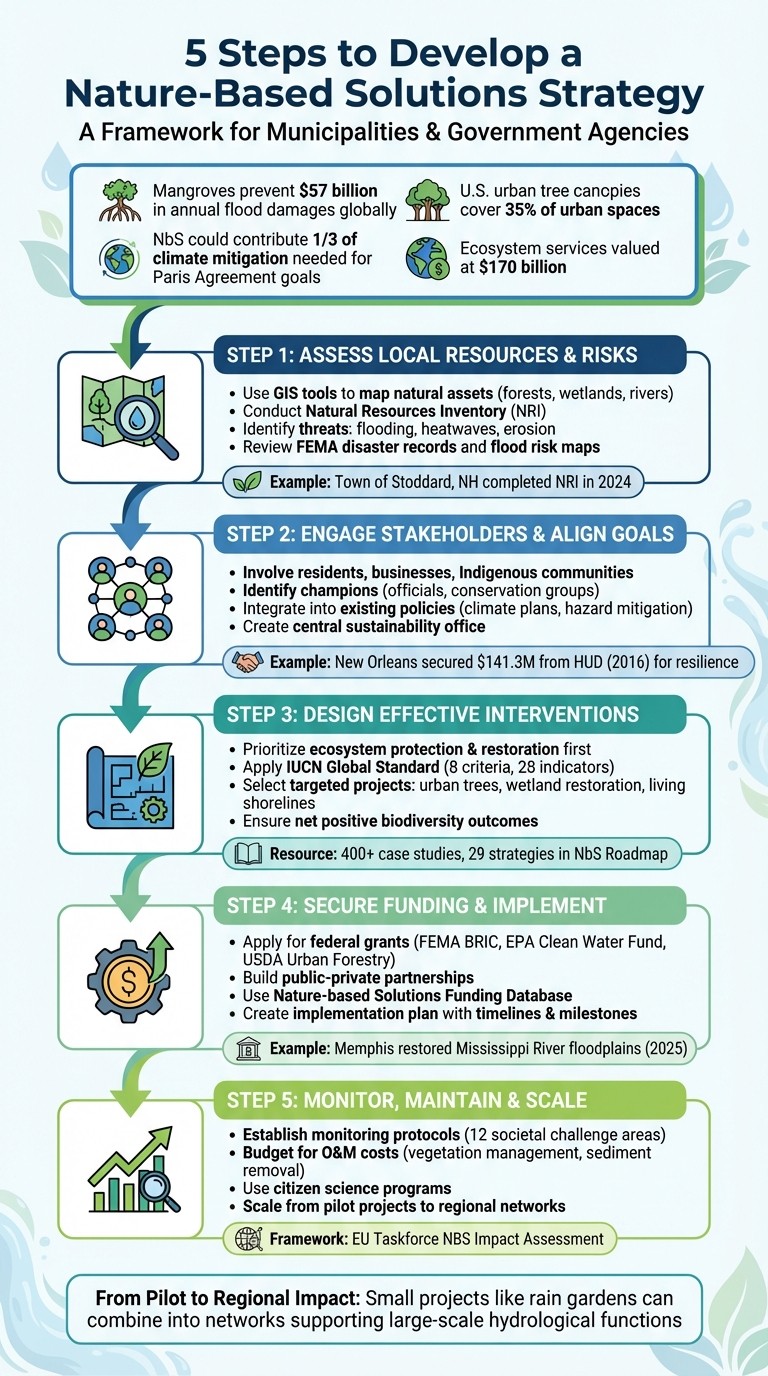
5-Step Nature-Based Solutions Strategy for Municipalities
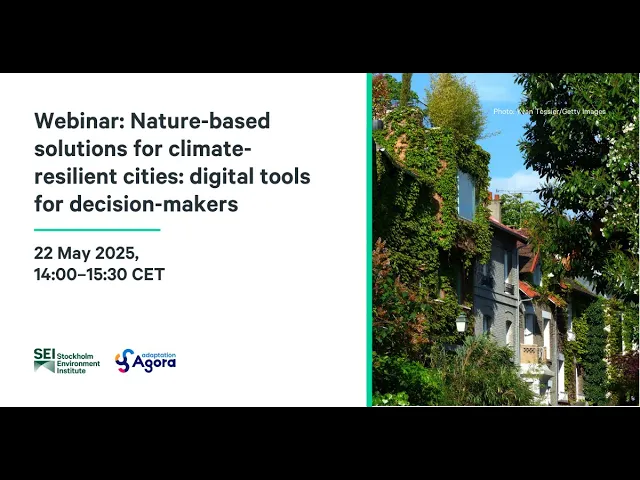
Webinar: Nature-based solutions for climate-resilient cities: digital tools for decision-makers
Step 1: Assess Local Natural Assets and Environmental Risks
Before diving into nature-based solutions (NbS), it’s crucial to understand the natural resources in your area and the challenges they face. This initial evaluation lays the groundwork for an effective NbS strategy.
Conduct a Natural Assets Inventory
Start by cataloging your community’s natural infrastructure. This includes forests, wetlands, rivers, grasslands, and even urban tree canopies. A Natural Resources Inventory (NRI) can be as simple as a list maintained by a local conservation group or as detailed as a professionally prepared report [6].
Geographic Information System (GIS) tools are invaluable for mapping these resources and their interconnections. For instance, in 2024, the Town of Stoddard, New Hampshire, used their Conservation Commission to complete a Natural Resource Inventory. This document now serves as a cornerstone for guiding local decisions on land use and conservation [6]. Such inventories should also account for the benefits these ecosystems provide, like flood control, carbon storage, and food production [2].
To make this information accessible and engaging, consider creating digital Story Maps. These tools turn raw data into visual narratives, making it easier to communicate the importance of protecting natural assets to both decision-makers and the broader community [6].
Once you’ve mapped out your assets, the next step is to assess the risks that could jeopardize these resources.
Identify Key Environmental Risks
After inventorying your natural assets, take a closer look at the environmental risks they face. Common threats include flooding, coastal erosion, wildfires, urban heat, and biodiversity loss. It’s also important to evaluate how these risks affect infrastructure and vulnerable populations [2][5].
"In order to incorporate green infrastructure into community management and adaptation plans, decision makers need information about how nature-based strategies can reduce their vulnerability to changing climate conditions."
– U.S. Climate Resilience Toolkit [2]
A strong example of this comes from The Nature Conservancy’s partnership with New Jersey following Hurricane Sandy. In 2016, they conducted a coastal habitat assessment to measure how natural systems - like marshes, dunes, and beaches - helped protect against future storms and flooding. This data played a critical role in shaping the state’s restoration priorities [2].
Historical data can also provide valuable insights. Federal resources, such as FEMA’s disaster declaration records and flood risk maps, help identify recurring hazards in your area. FEMA’s 2025 report highlighted 119 hazard mitigation sub-grants and an equal number of disaster declarations across states and counties [4]. This kind of information can guide where to focus investments in nature-based solutions to achieve the greatest protective benefits.
Step 2: Engage Stakeholders and Align Goals
After identifying your natural assets and assessing environmental risks, the next step involves bringing a variety of stakeholders to the table. Nature-based solutions (NbS) thrive on collaboration - they depend on the support and participation of diverse groups who will influence, fund, and sustain these initiatives. To move forward, map out your network of stakeholders and integrate NbS into your existing policies and frameworks.
Map Stakeholders and Build Partnerships
Take a "whole of community" approach by involving everyone - local residents, business owners, Indigenous knowledge holders, and nonprofit organizations [4]. Identify key champions, such as community leaders, elected officials, conservation groups, and climate experts [8].
For example, the Trust for Public Land's Climate Smart Cities program has partnered with various U.S. cities to develop urban parks that not only enhance green spaces but also address stormwater management and mitigate urban heat island effects [2].
When engaging stakeholders, focus on community priorities. Highlight assets that people care deeply about, such as a cherished neighborhood park, a downtown business district, or a local river. This approach creates alignment more effectively than abstract environmental goals [8]. Additionally, involving Indigenous communities can provide access to traditional ecological knowledge, which is invaluable for ensuring the long-term success of these projects [5].
Integrate NbS Goals with Existing Policies
NbS efforts are most effective when they’re embedded into existing municipal frameworks, such as climate adaptation plans, hazard mitigation strategies, sustainability roadmaps, or capital improvement budgets [7].
"Whole-of-government objectives like investing in nature and NbS, which act as linchpins connecting multiple city-wide and cross-sector goals, need to be comprehensively tracked across local budget processes and programme planning to demonstrate the value of their numerous co-benefits."
– Amanda Lloyd and Eugénie L. Birch, Penn Institute for Urban Research [3]
The City of New Orleans offers a compelling example of this integration. In January 2016, the city secured $141.3 million from the U.S. Department of Housing and Urban Development's National Disaster Resilience Competition. This funding was used to establish its first resilience district, where green infrastructure plays a central role in urban water management [2]. Rather than treating this as a separate environmental project, the initiative was seamlessly incorporated into the city’s disaster recovery and infrastructure strategies.
To avoid fragmented efforts, consider creating a central point of contact, such as a dedicated sustainability or resilience office, to oversee NbS activities across various departments [3]. Use established planning cycles, like updates to the Hazard Mitigation Plan, to introduce NbS concepts to stakeholders who may not typically prioritize environmental strategies [8]. Often, a closer look at departmental budgets will reveal existing activities - like youth tree-planting programs - that contribute to climate resilience but aren’t formally recognized or funded as such [3].
Step 3: Design Effective NbS Interventions
After gathering input from stakeholders and completing your asset inventory, the next step is to craft interventions that directly address the environmental challenges you've identified. These interventions should prioritize the health of natural systems while delivering measurable benefits for both ecosystems and local communities. Start by focusing on your existing natural assets - protecting and restoring them - before considering the addition of new infrastructure.
Prioritize Ecosystem Protection and Restoration
The foundation of effective nature-based solutions lies in maintaining and revitalizing healthy ecosystems. As the International Union for Conservation of Nature (IUCN) emphasizes:
"The benefits of Nature-based Solutions for biodiversity and human well-being flow from healthy ecosystems" [1].
Begin by identifying and safeguarding natural assets that are still intact, such as wetlands, forests, and coastal marshes. These areas naturally provide critical services like flood control, slope stabilization, and buffering against storm surges. Protecting these ecosystems ensures they can continue to serve their vital roles.
In addition, degraded areas - like channelized streams or disconnected wetlands - should be prioritized for restoration. Giving natural systems the space they need is equally important. Floodplains should be allowed to absorb excess water, shorelines must have room to shift naturally, and wildlife corridors benefit from enhanced connectivity [7].
Select Appropriate NbS Projects
Once you've addressed baseline protection and restoration, focus on designing new projects that target specific vulnerabilities identified in your assessment. Tailor these interventions to address local risks while delivering additional benefits. For instance, the Nicholas Institute for Energy, Environment & Sustainability has developed a "Nature-Based Solutions Roadmap" that highlights over 400 case studies and 29 strategies to guide implementation. These include measures like living shorelines, prescribed burns, and urban stormwater management [5].
Common examples of successful interventions include:
Expanding urban tree canopies to combat heat island effects
Restoring wetlands to filter pollutants and reduce flood risks
Constructing living shorelines to combat coastal erosion
Conducting prescribed burns to mitigate wildfire hazards [5]
Programs like The Trust for Public Land's Climate Smart Cities initiative showcase how these solutions can address multiple challenges simultaneously, such as reducing urban heat while improving stormwater management and protecting shorelines [2].
To ensure your interventions are effective, apply the IUCN Global Standard for Nature-based Solutions, which includes 8 criteria and 28 indicators for evaluating design and impact [1]. Strive for projects that deliver net positive outcomes for biodiversity - not just human benefits. Incorporating Indigenous knowledge where available can also enhance the relevance and success of these solutions, ensuring they align with local needs and respect traditional ecological practices [5]. Finally, identify any regulatory or permitting requirements early in the process to avoid delays during implementation [5].
Step 4: Secure Funding and Implement Projects
Once your interventions are planned and stakeholders are on board, the next step is to secure the financial backing needed to bring these nature-based solutions to reality. This stage requires a strategic approach to funding and meticulous planning to transition from ideas to actionable projects. Let’s delve into how to identify funding opportunities and create a solid implementation plan.
Identify Funding Opportunities
Federal grants are a cornerstone for funding municipal nature-based solutions. Programs like FEMA’s Building Resilient Infrastructure and Communities (BRIC) focus on hazard mitigation, while the EPA’s Clean Water State Revolving Fund supports water quality improvements and green infrastructure. The USDA’s Urban and Community Forestry Program funds urban tree canopy projects, and the Department of Transportation’s PROTECT grants aim to enhance infrastructure resilience against flooding and other natural hazards [10].
In addition to federal programs, partnership-driven financing plays a critical role. Municipal projects often blend contributions from federal, state, and local governments with support from nonprofits, tribal entities, private companies, and philanthropic organizations [10]. Other funding sources include the National Fish and Wildlife Foundation’s National Coastal Resilience Fund and the Land and Water Conservation Fund (LWCF), which is uniquely supported by offshore oil and gas lease revenues rather than taxpayer dollars [9][10]. For example, in 2025, the City of Memphis and West Memphis, Arkansas, utilized federal funding to restore floodplains along the Mississippi River, protecting critical freight and transportation infrastructure from flooding risks [9].
To simplify the search for funding, tools like the National Wildlife Federation’s Nature-based Solutions Funding Database can help filter opportunities by project type and eligibility [9]. However, it’s essential to stay updated on program statuses. By early 2026, some federal programs, such as WaterSMART Aquatic Ecosystem Restoration, were paused or under review, while others, like the Environmental and Climate Justice Community Change Grant under the Inflation Reduction Act, were discontinued [9]. Once funding is secured, the focus shifts to crafting a detailed implementation plan.
Develop an Implementation Plan
A well-thought-out implementation plan is crucial for turning funding into measurable outcomes. Instead of treating nature-based solutions as standalone efforts, integrate them into existing community management systems. This approach not only simplifies regulatory approvals but also aligns projects with current policies, potentially unlocking additional resources by prioritizing natural systems as critical infrastructure.
The plan should feature clear timelines, defined milestones, and specific roles for all stakeholders. Building cross-sector partnerships can enhance grant applications and improve the technical feasibility of projects. Addressing permitting and regulatory requirements early in the planning phase is also essential to avoid unnecessary delays.
Incorporate adaptive management strategies to ensure that natural systems can evolve and perform effectively over time. Plan for long-term maintenance to sustain these systems and their benefits. Additionally, measuring co-benefits - such as improved water quality or reduced urban heat - can demonstrate the project’s value to stakeholders and justify continued investment. Lastly, always consider equity to ensure these projects benefit vulnerable populations and promote inclusivity.
Step 5: Monitor, Maintain, and Scale NbS
Implementing nature-based solutions (NbS) is just the beginning. To ensure they provide lasting benefits and can expand effectively, attention must shift to monitoring, upkeep, and scaling efforts.
Establish Monitoring Protocols
Creating a robust monitoring framework is essential to track the wide-ranging impacts of NbS. For instance, the European Taskforce for NBS Impact Assessment, developed alongside 17 EU-funded projects, identified 12 societal challenge areas - spanning water management, air quality, social justice, and health outcomes - that can guide the selection of relevant indicators [11]. By using standardized indicators and methodologies, you ensure that the collected data is reliable and comparable, making it easier to justify future funding.
Monitoring should address both project outcomes and the condition of natural assets over time. For example, while a wetland may currently manage stormwater effectively, prolonged drought could alter its hydrology and reduce its capacity. Regular evaluations of ecosystem health - ensuring that wetlands, forests, and other green spaces retain the "room to function" - are critical to maintaining their benefits [7]. Align these assessments with existing community planning efforts to ensure they support broader municipal goals.
It’s equally important to confirm that interventions deliver net positive biodiversity outcomes [7]. Resources like the EU's "Evaluating the Impact of Nature-based Solutions" handbook can help develop evaluation frameworks for various scales [11]. Citizen science programs are another valuable tool, as they not only reduce monitoring costs but also foster community engagement [1]. A well-designed monitoring system sets the stage for effective maintenance and future growth.
Plan for Maintenance and Upkeep
Monitoring data plays a key role in identifying when maintenance or operational adjustments are needed. The IUCN Global Standard for Nature-based Solutions provides a helpful structure with its eight criteria and 28 indicators for ongoing management [1]. Regular self-assessments using these standards can highlight areas for improvement. Importantly, operation and maintenance (O&M) costs should be accounted for during the initial project planning phase [5]. This includes budgeting for activities like vegetation management, sediment removal, and adjustments to adapt to changing conditions.
To ensure long-term sustainability, green infrastructure should be integrated into standard community management and adaptation plans. Embedding these practices into municipal operations and budgets ensures they remain a priority [2]. Adaptive management strategies, which allow natural systems to evolve with environmental changes, are particularly effective for keeping NbS functional over time [5].
Explore Opportunities for Scaling
Insights gained from monitoring and maintenance can guide the expansion of NbS. Small-scale projects, such as rain gardens, can be combined into larger networks that support regional hydrologic functions and wildlife migration [5][2]. The Department of the Interior’s Nature-Based Solutions Roadmap offers more than 400 case studies and tools to help replicate proven successes across different regions [5].
Scaling efforts should also involve a shift from traditional gray infrastructure to natural or hybrid models [5]. Tools like Natural Capital Accounting can quantify the value of natural assets, providing a strong case for regional expansion [5]. To secure funding for these larger-scale implementations, consider leveraging Green Banks and community lenders. Globally, NbS could contribute up to one-third of the climate mitigation needed to meet Paris Agreement goals, with ecosystem services valued at an estimated $170 billion [1].
Adaptive management ensures that lessons from early phases inform larger projects. Engage communities and build partnerships early to maximize social benefits and address potential regulatory hurdles that could delay broader implementation [5]. By refining designs and fostering collaboration, you can pave the way for successful regional rollouts of NbS.
Conclusion and Next Steps
Creating an effective Nature-based Solutions (NbS) strategy involves several key steps: evaluating current assets, engaging with stakeholders, designing targeted interventions, securing necessary funding, and closely monitoring outcomes. By giving natural systems the same importance as traditional infrastructure, municipalities can address pressing environmental challenges while benefiting from enhanced climate resilience, biodiversity, and improved community well-being.
Shifting from isolated projects to regional-scale planning is critical to achieving broader impacts. For instance, small efforts like installing rain gardens can collectively form networks that enhance large-scale hydrological functions and support species migration within a community [2]. This approach lays a strong groundwork to tackle operational challenges and achieve sustainable, long-term outcomes.
However, implementing an NbS strategy comes with its own set of hurdles, such as regulatory barriers, funding limitations, and the challenge of integrating natural infrastructure into existing plans. Expert guidance can be invaluable in navigating these complexities, aligning initiatives with global standards like the IUCN criteria, and ensuring that projects deliver measurable benefits across environmental, social, and economic dimensions.
Each step outlined above contributes to building resilient, scalable municipal solutions that harness the power of nature-based approaches to create lasting value for communities.
Council Fire is dedicated to turning sustainability strategies into actionable outcomes. Our team collaborates with municipalities and government agencies to implement nature-based solutions through climate resilience planning, stakeholder engagement, and data-driven strategies. We provide practical solutions that transform ambitious environmental goals into tangible benefits for communities.
FAQs
What funding options are available for municipalities to implement nature-based solutions?
Municipalities frequently tap into a variety of federal and state funding programs to bring nature-based solutions to life. Key sources include grants and loans from initiatives such as the Clean Water State Revolving Fund, EPA green infrastructure grants, and new funding streams introduced by the Inflation Reduction Act and the Bipartisan Infrastructure Law.
Beyond these, additional financial support is often available through rebates, tax incentives, and blended-finance mechanisms. Many states also run specialized climate investment programs designed specifically for nature-focused projects. By exploring these avenues, municipalities can secure the resources they need to implement sustainable solutions that benefit their communities.
How can municipalities engage communities effectively in nature-based solutions projects?
Municipalities can effectively involve communities in nature-based solutions (NbS) projects by building inclusive partnerships and fostering open, transparent communication. Bringing together a diverse group of stakeholders - such as residents, local businesses, tribal organizations, NGOs, and utility providers - early in the planning stages is key. Hosting events like workshops, visioning sessions, and open house meetings allows for the collection of community insights, priorities, and local expertise, while also cultivating trust and a sense of shared ownership.
To sustain stakeholder engagement, provide consistent updates through newsletters, social media, or project dashboards. Incorporating community feedback into planning ensures their voices shape the project, with measurable outcomes like reduced flood risks or improved access to green spaces serving as benchmarks for success. Highlighting additional benefits - such as cost savings, increased property values, and better public health - can further attract funding and political backing. By emphasizing collaboration and transparency, municipalities can align NbS initiatives with community goals and deliver meaningful environmental and social outcomes.
What are the main benefits of using nature-based solutions in municipal policies?
Integrating nature-based solutions (NbS) into city planning brings a host of benefits across environmental, economic, and social dimensions. By weaving natural features like wetlands, urban forests, and green roofs into municipal policies, cities can tackle issues such as flood management, water quality improvement, urban heat reduction, and carbon capture. These approaches often prove to be more cost-efficient than traditional infrastructure, delivering a strong return on investment for city budgets.
The advantages extend beyond the environment. NbS can stimulate local economies by creating green jobs, boosting property values, and enhancing public health. Cleaner air, shaded spaces, and accessible recreational areas contribute to healthier communities. Additionally, these solutions allow cities to address multiple challenges simultaneously - like mitigating climate change, achieving water quality standards, and promoting equity - making them a key strategy for fostering resilient and vibrant urban environments.
Related Blog Posts
Why Local Governments Must Lead the Climate Fight - With or Without Federal Support
The Resilience Funding Gap: How Cities Can Build Long-Term Climate Finance Strategies
How to Build a Climate Resilience Plan for Municipalities & Government Agencies
Nature‑based solutions: leveraging ecosystems for adaptation
Latest Articles
©2025


FAQ
FAQ
01
What does it really mean to “redefine profit”?
02
What makes Council Fire different?
03
Who does Council Fire you work with?
04
What does working with Council Fire actually look like?
05
How does Council Fire help organizations turn big goals into action?
06
How does Council Fire define and measure success?
01
What does it really mean to “redefine profit”?
02
What makes Council Fire different?
03
Who does Council Fire you work with?
04
What does working with Council Fire actually look like?
05
How does Council Fire help organizations turn big goals into action?
06
How does Council Fire define and measure success?
Jan 19, 2026
How to Develop a Nature-Based Solutions Strategy for Municipalities & Government Agencies
Sustainability Strategy
In This Article
Step-by-step guide for municipalities to map natural assets, engage stakeholders, design and fund nature-based projects, and monitor results for climate resilience.
How to Develop a Nature-Based Solutions Strategy for Municipalities & Government Agencies
Nature-based solutions (NbS) offer a practical way for municipalities and government agencies to address challenges like climate change, urban flooding, and biodiversity loss by working with natural ecosystems rather than against them. This approach can reduce risks, improve resilience, and deliver societal benefits. For example, mangroves prevent $57 billion in annual flood damages globally, and U.S. cities already benefit from natural features like urban tree canopies covering 35% of urban spaces.
To develop an effective NbS strategy, follow these steps:
Assess Local Resources and Risks: Use tools like GIS to map natural assets (forests, wetlands, rivers) and identify threats such as flooding or heatwaves.
Engage Stakeholders: Collaborate with residents, businesses, and community leaders to align goals and integrate NbS into existing policies.
Design Tailored Projects: Focus on protecting and restoring ecosystems first, then implement targeted interventions like urban tree planting or wetland restoration.
Secure Funding: Leverage federal grants (e.g., FEMA, EPA) and public-private partnerships to finance NbS projects.
Monitor and Maintain: Use data-driven methods to track outcomes, ensure long-term maintenance, and scale successful projects.
5-Step Nature-Based Solutions Strategy for Municipalities
Webinar: Nature-based solutions for climate-resilient cities: digital tools for decision-makers
Step 1: Assess Local Natural Assets and Environmental Risks
Before diving into nature-based solutions (NbS), it’s crucial to understand the natural resources in your area and the challenges they face. This initial evaluation lays the groundwork for an effective NbS strategy.
Conduct a Natural Assets Inventory
Start by cataloging your community’s natural infrastructure. This includes forests, wetlands, rivers, grasslands, and even urban tree canopies. A Natural Resources Inventory (NRI) can be as simple as a list maintained by a local conservation group or as detailed as a professionally prepared report [6].
Geographic Information System (GIS) tools are invaluable for mapping these resources and their interconnections. For instance, in 2024, the Town of Stoddard, New Hampshire, used their Conservation Commission to complete a Natural Resource Inventory. This document now serves as a cornerstone for guiding local decisions on land use and conservation [6]. Such inventories should also account for the benefits these ecosystems provide, like flood control, carbon storage, and food production [2].
To make this information accessible and engaging, consider creating digital Story Maps. These tools turn raw data into visual narratives, making it easier to communicate the importance of protecting natural assets to both decision-makers and the broader community [6].
Once you’ve mapped out your assets, the next step is to assess the risks that could jeopardize these resources.
Identify Key Environmental Risks
After inventorying your natural assets, take a closer look at the environmental risks they face. Common threats include flooding, coastal erosion, wildfires, urban heat, and biodiversity loss. It’s also important to evaluate how these risks affect infrastructure and vulnerable populations [2][5].
"In order to incorporate green infrastructure into community management and adaptation plans, decision makers need information about how nature-based strategies can reduce their vulnerability to changing climate conditions."
– U.S. Climate Resilience Toolkit [2]
A strong example of this comes from The Nature Conservancy’s partnership with New Jersey following Hurricane Sandy. In 2016, they conducted a coastal habitat assessment to measure how natural systems - like marshes, dunes, and beaches - helped protect against future storms and flooding. This data played a critical role in shaping the state’s restoration priorities [2].
Historical data can also provide valuable insights. Federal resources, such as FEMA’s disaster declaration records and flood risk maps, help identify recurring hazards in your area. FEMA’s 2025 report highlighted 119 hazard mitigation sub-grants and an equal number of disaster declarations across states and counties [4]. This kind of information can guide where to focus investments in nature-based solutions to achieve the greatest protective benefits.
Step 2: Engage Stakeholders and Align Goals
After identifying your natural assets and assessing environmental risks, the next step involves bringing a variety of stakeholders to the table. Nature-based solutions (NbS) thrive on collaboration - they depend on the support and participation of diverse groups who will influence, fund, and sustain these initiatives. To move forward, map out your network of stakeholders and integrate NbS into your existing policies and frameworks.
Map Stakeholders and Build Partnerships
Take a "whole of community" approach by involving everyone - local residents, business owners, Indigenous knowledge holders, and nonprofit organizations [4]. Identify key champions, such as community leaders, elected officials, conservation groups, and climate experts [8].
For example, the Trust for Public Land's Climate Smart Cities program has partnered with various U.S. cities to develop urban parks that not only enhance green spaces but also address stormwater management and mitigate urban heat island effects [2].
When engaging stakeholders, focus on community priorities. Highlight assets that people care deeply about, such as a cherished neighborhood park, a downtown business district, or a local river. This approach creates alignment more effectively than abstract environmental goals [8]. Additionally, involving Indigenous communities can provide access to traditional ecological knowledge, which is invaluable for ensuring the long-term success of these projects [5].
Integrate NbS Goals with Existing Policies
NbS efforts are most effective when they’re embedded into existing municipal frameworks, such as climate adaptation plans, hazard mitigation strategies, sustainability roadmaps, or capital improvement budgets [7].
"Whole-of-government objectives like investing in nature and NbS, which act as linchpins connecting multiple city-wide and cross-sector goals, need to be comprehensively tracked across local budget processes and programme planning to demonstrate the value of their numerous co-benefits."
– Amanda Lloyd and Eugénie L. Birch, Penn Institute for Urban Research [3]
The City of New Orleans offers a compelling example of this integration. In January 2016, the city secured $141.3 million from the U.S. Department of Housing and Urban Development's National Disaster Resilience Competition. This funding was used to establish its first resilience district, where green infrastructure plays a central role in urban water management [2]. Rather than treating this as a separate environmental project, the initiative was seamlessly incorporated into the city’s disaster recovery and infrastructure strategies.
To avoid fragmented efforts, consider creating a central point of contact, such as a dedicated sustainability or resilience office, to oversee NbS activities across various departments [3]. Use established planning cycles, like updates to the Hazard Mitigation Plan, to introduce NbS concepts to stakeholders who may not typically prioritize environmental strategies [8]. Often, a closer look at departmental budgets will reveal existing activities - like youth tree-planting programs - that contribute to climate resilience but aren’t formally recognized or funded as such [3].
Step 3: Design Effective NbS Interventions
After gathering input from stakeholders and completing your asset inventory, the next step is to craft interventions that directly address the environmental challenges you've identified. These interventions should prioritize the health of natural systems while delivering measurable benefits for both ecosystems and local communities. Start by focusing on your existing natural assets - protecting and restoring them - before considering the addition of new infrastructure.
Prioritize Ecosystem Protection and Restoration
The foundation of effective nature-based solutions lies in maintaining and revitalizing healthy ecosystems. As the International Union for Conservation of Nature (IUCN) emphasizes:
"The benefits of Nature-based Solutions for biodiversity and human well-being flow from healthy ecosystems" [1].
Begin by identifying and safeguarding natural assets that are still intact, such as wetlands, forests, and coastal marshes. These areas naturally provide critical services like flood control, slope stabilization, and buffering against storm surges. Protecting these ecosystems ensures they can continue to serve their vital roles.
In addition, degraded areas - like channelized streams or disconnected wetlands - should be prioritized for restoration. Giving natural systems the space they need is equally important. Floodplains should be allowed to absorb excess water, shorelines must have room to shift naturally, and wildlife corridors benefit from enhanced connectivity [7].
Select Appropriate NbS Projects
Once you've addressed baseline protection and restoration, focus on designing new projects that target specific vulnerabilities identified in your assessment. Tailor these interventions to address local risks while delivering additional benefits. For instance, the Nicholas Institute for Energy, Environment & Sustainability has developed a "Nature-Based Solutions Roadmap" that highlights over 400 case studies and 29 strategies to guide implementation. These include measures like living shorelines, prescribed burns, and urban stormwater management [5].
Common examples of successful interventions include:
Expanding urban tree canopies to combat heat island effects
Restoring wetlands to filter pollutants and reduce flood risks
Constructing living shorelines to combat coastal erosion
Conducting prescribed burns to mitigate wildfire hazards [5]
Programs like The Trust for Public Land's Climate Smart Cities initiative showcase how these solutions can address multiple challenges simultaneously, such as reducing urban heat while improving stormwater management and protecting shorelines [2].
To ensure your interventions are effective, apply the IUCN Global Standard for Nature-based Solutions, which includes 8 criteria and 28 indicators for evaluating design and impact [1]. Strive for projects that deliver net positive outcomes for biodiversity - not just human benefits. Incorporating Indigenous knowledge where available can also enhance the relevance and success of these solutions, ensuring they align with local needs and respect traditional ecological practices [5]. Finally, identify any regulatory or permitting requirements early in the process to avoid delays during implementation [5].
Step 4: Secure Funding and Implement Projects
Once your interventions are planned and stakeholders are on board, the next step is to secure the financial backing needed to bring these nature-based solutions to reality. This stage requires a strategic approach to funding and meticulous planning to transition from ideas to actionable projects. Let’s delve into how to identify funding opportunities and create a solid implementation plan.
Identify Funding Opportunities
Federal grants are a cornerstone for funding municipal nature-based solutions. Programs like FEMA’s Building Resilient Infrastructure and Communities (BRIC) focus on hazard mitigation, while the EPA’s Clean Water State Revolving Fund supports water quality improvements and green infrastructure. The USDA’s Urban and Community Forestry Program funds urban tree canopy projects, and the Department of Transportation’s PROTECT grants aim to enhance infrastructure resilience against flooding and other natural hazards [10].
In addition to federal programs, partnership-driven financing plays a critical role. Municipal projects often blend contributions from federal, state, and local governments with support from nonprofits, tribal entities, private companies, and philanthropic organizations [10]. Other funding sources include the National Fish and Wildlife Foundation’s National Coastal Resilience Fund and the Land and Water Conservation Fund (LWCF), which is uniquely supported by offshore oil and gas lease revenues rather than taxpayer dollars [9][10]. For example, in 2025, the City of Memphis and West Memphis, Arkansas, utilized federal funding to restore floodplains along the Mississippi River, protecting critical freight and transportation infrastructure from flooding risks [9].
To simplify the search for funding, tools like the National Wildlife Federation’s Nature-based Solutions Funding Database can help filter opportunities by project type and eligibility [9]. However, it’s essential to stay updated on program statuses. By early 2026, some federal programs, such as WaterSMART Aquatic Ecosystem Restoration, were paused or under review, while others, like the Environmental and Climate Justice Community Change Grant under the Inflation Reduction Act, were discontinued [9]. Once funding is secured, the focus shifts to crafting a detailed implementation plan.
Develop an Implementation Plan
A well-thought-out implementation plan is crucial for turning funding into measurable outcomes. Instead of treating nature-based solutions as standalone efforts, integrate them into existing community management systems. This approach not only simplifies regulatory approvals but also aligns projects with current policies, potentially unlocking additional resources by prioritizing natural systems as critical infrastructure.
The plan should feature clear timelines, defined milestones, and specific roles for all stakeholders. Building cross-sector partnerships can enhance grant applications and improve the technical feasibility of projects. Addressing permitting and regulatory requirements early in the planning phase is also essential to avoid unnecessary delays.
Incorporate adaptive management strategies to ensure that natural systems can evolve and perform effectively over time. Plan for long-term maintenance to sustain these systems and their benefits. Additionally, measuring co-benefits - such as improved water quality or reduced urban heat - can demonstrate the project’s value to stakeholders and justify continued investment. Lastly, always consider equity to ensure these projects benefit vulnerable populations and promote inclusivity.
Step 5: Monitor, Maintain, and Scale NbS
Implementing nature-based solutions (NbS) is just the beginning. To ensure they provide lasting benefits and can expand effectively, attention must shift to monitoring, upkeep, and scaling efforts.
Establish Monitoring Protocols
Creating a robust monitoring framework is essential to track the wide-ranging impacts of NbS. For instance, the European Taskforce for NBS Impact Assessment, developed alongside 17 EU-funded projects, identified 12 societal challenge areas - spanning water management, air quality, social justice, and health outcomes - that can guide the selection of relevant indicators [11]. By using standardized indicators and methodologies, you ensure that the collected data is reliable and comparable, making it easier to justify future funding.
Monitoring should address both project outcomes and the condition of natural assets over time. For example, while a wetland may currently manage stormwater effectively, prolonged drought could alter its hydrology and reduce its capacity. Regular evaluations of ecosystem health - ensuring that wetlands, forests, and other green spaces retain the "room to function" - are critical to maintaining their benefits [7]. Align these assessments with existing community planning efforts to ensure they support broader municipal goals.
It’s equally important to confirm that interventions deliver net positive biodiversity outcomes [7]. Resources like the EU's "Evaluating the Impact of Nature-based Solutions" handbook can help develop evaluation frameworks for various scales [11]. Citizen science programs are another valuable tool, as they not only reduce monitoring costs but also foster community engagement [1]. A well-designed monitoring system sets the stage for effective maintenance and future growth.
Plan for Maintenance and Upkeep
Monitoring data plays a key role in identifying when maintenance or operational adjustments are needed. The IUCN Global Standard for Nature-based Solutions provides a helpful structure with its eight criteria and 28 indicators for ongoing management [1]. Regular self-assessments using these standards can highlight areas for improvement. Importantly, operation and maintenance (O&M) costs should be accounted for during the initial project planning phase [5]. This includes budgeting for activities like vegetation management, sediment removal, and adjustments to adapt to changing conditions.
To ensure long-term sustainability, green infrastructure should be integrated into standard community management and adaptation plans. Embedding these practices into municipal operations and budgets ensures they remain a priority [2]. Adaptive management strategies, which allow natural systems to evolve with environmental changes, are particularly effective for keeping NbS functional over time [5].
Explore Opportunities for Scaling
Insights gained from monitoring and maintenance can guide the expansion of NbS. Small-scale projects, such as rain gardens, can be combined into larger networks that support regional hydrologic functions and wildlife migration [5][2]. The Department of the Interior’s Nature-Based Solutions Roadmap offers more than 400 case studies and tools to help replicate proven successes across different regions [5].
Scaling efforts should also involve a shift from traditional gray infrastructure to natural or hybrid models [5]. Tools like Natural Capital Accounting can quantify the value of natural assets, providing a strong case for regional expansion [5]. To secure funding for these larger-scale implementations, consider leveraging Green Banks and community lenders. Globally, NbS could contribute up to one-third of the climate mitigation needed to meet Paris Agreement goals, with ecosystem services valued at an estimated $170 billion [1].
Adaptive management ensures that lessons from early phases inform larger projects. Engage communities and build partnerships early to maximize social benefits and address potential regulatory hurdles that could delay broader implementation [5]. By refining designs and fostering collaboration, you can pave the way for successful regional rollouts of NbS.
Conclusion and Next Steps
Creating an effective Nature-based Solutions (NbS) strategy involves several key steps: evaluating current assets, engaging with stakeholders, designing targeted interventions, securing necessary funding, and closely monitoring outcomes. By giving natural systems the same importance as traditional infrastructure, municipalities can address pressing environmental challenges while benefiting from enhanced climate resilience, biodiversity, and improved community well-being.
Shifting from isolated projects to regional-scale planning is critical to achieving broader impacts. For instance, small efforts like installing rain gardens can collectively form networks that enhance large-scale hydrological functions and support species migration within a community [2]. This approach lays a strong groundwork to tackle operational challenges and achieve sustainable, long-term outcomes.
However, implementing an NbS strategy comes with its own set of hurdles, such as regulatory barriers, funding limitations, and the challenge of integrating natural infrastructure into existing plans. Expert guidance can be invaluable in navigating these complexities, aligning initiatives with global standards like the IUCN criteria, and ensuring that projects deliver measurable benefits across environmental, social, and economic dimensions.
Each step outlined above contributes to building resilient, scalable municipal solutions that harness the power of nature-based approaches to create lasting value for communities.
Council Fire is dedicated to turning sustainability strategies into actionable outcomes. Our team collaborates with municipalities and government agencies to implement nature-based solutions through climate resilience planning, stakeholder engagement, and data-driven strategies. We provide practical solutions that transform ambitious environmental goals into tangible benefits for communities.
FAQs
What funding options are available for municipalities to implement nature-based solutions?
Municipalities frequently tap into a variety of federal and state funding programs to bring nature-based solutions to life. Key sources include grants and loans from initiatives such as the Clean Water State Revolving Fund, EPA green infrastructure grants, and new funding streams introduced by the Inflation Reduction Act and the Bipartisan Infrastructure Law.
Beyond these, additional financial support is often available through rebates, tax incentives, and blended-finance mechanisms. Many states also run specialized climate investment programs designed specifically for nature-focused projects. By exploring these avenues, municipalities can secure the resources they need to implement sustainable solutions that benefit their communities.
How can municipalities engage communities effectively in nature-based solutions projects?
Municipalities can effectively involve communities in nature-based solutions (NbS) projects by building inclusive partnerships and fostering open, transparent communication. Bringing together a diverse group of stakeholders - such as residents, local businesses, tribal organizations, NGOs, and utility providers - early in the planning stages is key. Hosting events like workshops, visioning sessions, and open house meetings allows for the collection of community insights, priorities, and local expertise, while also cultivating trust and a sense of shared ownership.
To sustain stakeholder engagement, provide consistent updates through newsletters, social media, or project dashboards. Incorporating community feedback into planning ensures their voices shape the project, with measurable outcomes like reduced flood risks or improved access to green spaces serving as benchmarks for success. Highlighting additional benefits - such as cost savings, increased property values, and better public health - can further attract funding and political backing. By emphasizing collaboration and transparency, municipalities can align NbS initiatives with community goals and deliver meaningful environmental and social outcomes.
What are the main benefits of using nature-based solutions in municipal policies?
Integrating nature-based solutions (NbS) into city planning brings a host of benefits across environmental, economic, and social dimensions. By weaving natural features like wetlands, urban forests, and green roofs into municipal policies, cities can tackle issues such as flood management, water quality improvement, urban heat reduction, and carbon capture. These approaches often prove to be more cost-efficient than traditional infrastructure, delivering a strong return on investment for city budgets.
The advantages extend beyond the environment. NbS can stimulate local economies by creating green jobs, boosting property values, and enhancing public health. Cleaner air, shaded spaces, and accessible recreational areas contribute to healthier communities. Additionally, these solutions allow cities to address multiple challenges simultaneously - like mitigating climate change, achieving water quality standards, and promoting equity - making them a key strategy for fostering resilient and vibrant urban environments.
Related Blog Posts
Why Local Governments Must Lead the Climate Fight - With or Without Federal Support
The Resilience Funding Gap: How Cities Can Build Long-Term Climate Finance Strategies
How to Build a Climate Resilience Plan for Municipalities & Government Agencies
Nature‑based solutions: leveraging ecosystems for adaptation
FAQ
01
What does it really mean to “redefine profit”?
02
What makes Council Fire different?
03
Who does Council Fire you work with?
04
What does working with Council Fire actually look like?
05
How does Council Fire help organizations turn big goals into action?
06
How does Council Fire define and measure success?
Jan 19, 2026
How to Develop a Nature-Based Solutions Strategy for Municipalities & Government Agencies
Sustainability Strategy
In This Article
Step-by-step guide for municipalities to map natural assets, engage stakeholders, design and fund nature-based projects, and monitor results for climate resilience.
How to Develop a Nature-Based Solutions Strategy for Municipalities & Government Agencies
Nature-based solutions (NbS) offer a practical way for municipalities and government agencies to address challenges like climate change, urban flooding, and biodiversity loss by working with natural ecosystems rather than against them. This approach can reduce risks, improve resilience, and deliver societal benefits. For example, mangroves prevent $57 billion in annual flood damages globally, and U.S. cities already benefit from natural features like urban tree canopies covering 35% of urban spaces.
To develop an effective NbS strategy, follow these steps:
Assess Local Resources and Risks: Use tools like GIS to map natural assets (forests, wetlands, rivers) and identify threats such as flooding or heatwaves.
Engage Stakeholders: Collaborate with residents, businesses, and community leaders to align goals and integrate NbS into existing policies.
Design Tailored Projects: Focus on protecting and restoring ecosystems first, then implement targeted interventions like urban tree planting or wetland restoration.
Secure Funding: Leverage federal grants (e.g., FEMA, EPA) and public-private partnerships to finance NbS projects.
Monitor and Maintain: Use data-driven methods to track outcomes, ensure long-term maintenance, and scale successful projects.
5-Step Nature-Based Solutions Strategy for Municipalities
Webinar: Nature-based solutions for climate-resilient cities: digital tools for decision-makers
Step 1: Assess Local Natural Assets and Environmental Risks
Before diving into nature-based solutions (NbS), it’s crucial to understand the natural resources in your area and the challenges they face. This initial evaluation lays the groundwork for an effective NbS strategy.
Conduct a Natural Assets Inventory
Start by cataloging your community’s natural infrastructure. This includes forests, wetlands, rivers, grasslands, and even urban tree canopies. A Natural Resources Inventory (NRI) can be as simple as a list maintained by a local conservation group or as detailed as a professionally prepared report [6].
Geographic Information System (GIS) tools are invaluable for mapping these resources and their interconnections. For instance, in 2024, the Town of Stoddard, New Hampshire, used their Conservation Commission to complete a Natural Resource Inventory. This document now serves as a cornerstone for guiding local decisions on land use and conservation [6]. Such inventories should also account for the benefits these ecosystems provide, like flood control, carbon storage, and food production [2].
To make this information accessible and engaging, consider creating digital Story Maps. These tools turn raw data into visual narratives, making it easier to communicate the importance of protecting natural assets to both decision-makers and the broader community [6].
Once you’ve mapped out your assets, the next step is to assess the risks that could jeopardize these resources.
Identify Key Environmental Risks
After inventorying your natural assets, take a closer look at the environmental risks they face. Common threats include flooding, coastal erosion, wildfires, urban heat, and biodiversity loss. It’s also important to evaluate how these risks affect infrastructure and vulnerable populations [2][5].
"In order to incorporate green infrastructure into community management and adaptation plans, decision makers need information about how nature-based strategies can reduce their vulnerability to changing climate conditions."
– U.S. Climate Resilience Toolkit [2]
A strong example of this comes from The Nature Conservancy’s partnership with New Jersey following Hurricane Sandy. In 2016, they conducted a coastal habitat assessment to measure how natural systems - like marshes, dunes, and beaches - helped protect against future storms and flooding. This data played a critical role in shaping the state’s restoration priorities [2].
Historical data can also provide valuable insights. Federal resources, such as FEMA’s disaster declaration records and flood risk maps, help identify recurring hazards in your area. FEMA’s 2025 report highlighted 119 hazard mitigation sub-grants and an equal number of disaster declarations across states and counties [4]. This kind of information can guide where to focus investments in nature-based solutions to achieve the greatest protective benefits.
Step 2: Engage Stakeholders and Align Goals
After identifying your natural assets and assessing environmental risks, the next step involves bringing a variety of stakeholders to the table. Nature-based solutions (NbS) thrive on collaboration - they depend on the support and participation of diverse groups who will influence, fund, and sustain these initiatives. To move forward, map out your network of stakeholders and integrate NbS into your existing policies and frameworks.
Map Stakeholders and Build Partnerships
Take a "whole of community" approach by involving everyone - local residents, business owners, Indigenous knowledge holders, and nonprofit organizations [4]. Identify key champions, such as community leaders, elected officials, conservation groups, and climate experts [8].
For example, the Trust for Public Land's Climate Smart Cities program has partnered with various U.S. cities to develop urban parks that not only enhance green spaces but also address stormwater management and mitigate urban heat island effects [2].
When engaging stakeholders, focus on community priorities. Highlight assets that people care deeply about, such as a cherished neighborhood park, a downtown business district, or a local river. This approach creates alignment more effectively than abstract environmental goals [8]. Additionally, involving Indigenous communities can provide access to traditional ecological knowledge, which is invaluable for ensuring the long-term success of these projects [5].
Integrate NbS Goals with Existing Policies
NbS efforts are most effective when they’re embedded into existing municipal frameworks, such as climate adaptation plans, hazard mitigation strategies, sustainability roadmaps, or capital improvement budgets [7].
"Whole-of-government objectives like investing in nature and NbS, which act as linchpins connecting multiple city-wide and cross-sector goals, need to be comprehensively tracked across local budget processes and programme planning to demonstrate the value of their numerous co-benefits."
– Amanda Lloyd and Eugénie L. Birch, Penn Institute for Urban Research [3]
The City of New Orleans offers a compelling example of this integration. In January 2016, the city secured $141.3 million from the U.S. Department of Housing and Urban Development's National Disaster Resilience Competition. This funding was used to establish its first resilience district, where green infrastructure plays a central role in urban water management [2]. Rather than treating this as a separate environmental project, the initiative was seamlessly incorporated into the city’s disaster recovery and infrastructure strategies.
To avoid fragmented efforts, consider creating a central point of contact, such as a dedicated sustainability or resilience office, to oversee NbS activities across various departments [3]. Use established planning cycles, like updates to the Hazard Mitigation Plan, to introduce NbS concepts to stakeholders who may not typically prioritize environmental strategies [8]. Often, a closer look at departmental budgets will reveal existing activities - like youth tree-planting programs - that contribute to climate resilience but aren’t formally recognized or funded as such [3].
Step 3: Design Effective NbS Interventions
After gathering input from stakeholders and completing your asset inventory, the next step is to craft interventions that directly address the environmental challenges you've identified. These interventions should prioritize the health of natural systems while delivering measurable benefits for both ecosystems and local communities. Start by focusing on your existing natural assets - protecting and restoring them - before considering the addition of new infrastructure.
Prioritize Ecosystem Protection and Restoration
The foundation of effective nature-based solutions lies in maintaining and revitalizing healthy ecosystems. As the International Union for Conservation of Nature (IUCN) emphasizes:
"The benefits of Nature-based Solutions for biodiversity and human well-being flow from healthy ecosystems" [1].
Begin by identifying and safeguarding natural assets that are still intact, such as wetlands, forests, and coastal marshes. These areas naturally provide critical services like flood control, slope stabilization, and buffering against storm surges. Protecting these ecosystems ensures they can continue to serve their vital roles.
In addition, degraded areas - like channelized streams or disconnected wetlands - should be prioritized for restoration. Giving natural systems the space they need is equally important. Floodplains should be allowed to absorb excess water, shorelines must have room to shift naturally, and wildlife corridors benefit from enhanced connectivity [7].
Select Appropriate NbS Projects
Once you've addressed baseline protection and restoration, focus on designing new projects that target specific vulnerabilities identified in your assessment. Tailor these interventions to address local risks while delivering additional benefits. For instance, the Nicholas Institute for Energy, Environment & Sustainability has developed a "Nature-Based Solutions Roadmap" that highlights over 400 case studies and 29 strategies to guide implementation. These include measures like living shorelines, prescribed burns, and urban stormwater management [5].
Common examples of successful interventions include:
Expanding urban tree canopies to combat heat island effects
Restoring wetlands to filter pollutants and reduce flood risks
Constructing living shorelines to combat coastal erosion
Conducting prescribed burns to mitigate wildfire hazards [5]
Programs like The Trust for Public Land's Climate Smart Cities initiative showcase how these solutions can address multiple challenges simultaneously, such as reducing urban heat while improving stormwater management and protecting shorelines [2].
To ensure your interventions are effective, apply the IUCN Global Standard for Nature-based Solutions, which includes 8 criteria and 28 indicators for evaluating design and impact [1]. Strive for projects that deliver net positive outcomes for biodiversity - not just human benefits. Incorporating Indigenous knowledge where available can also enhance the relevance and success of these solutions, ensuring they align with local needs and respect traditional ecological practices [5]. Finally, identify any regulatory or permitting requirements early in the process to avoid delays during implementation [5].
Step 4: Secure Funding and Implement Projects
Once your interventions are planned and stakeholders are on board, the next step is to secure the financial backing needed to bring these nature-based solutions to reality. This stage requires a strategic approach to funding and meticulous planning to transition from ideas to actionable projects. Let’s delve into how to identify funding opportunities and create a solid implementation plan.
Identify Funding Opportunities
Federal grants are a cornerstone for funding municipal nature-based solutions. Programs like FEMA’s Building Resilient Infrastructure and Communities (BRIC) focus on hazard mitigation, while the EPA’s Clean Water State Revolving Fund supports water quality improvements and green infrastructure. The USDA’s Urban and Community Forestry Program funds urban tree canopy projects, and the Department of Transportation’s PROTECT grants aim to enhance infrastructure resilience against flooding and other natural hazards [10].
In addition to federal programs, partnership-driven financing plays a critical role. Municipal projects often blend contributions from federal, state, and local governments with support from nonprofits, tribal entities, private companies, and philanthropic organizations [10]. Other funding sources include the National Fish and Wildlife Foundation’s National Coastal Resilience Fund and the Land and Water Conservation Fund (LWCF), which is uniquely supported by offshore oil and gas lease revenues rather than taxpayer dollars [9][10]. For example, in 2025, the City of Memphis and West Memphis, Arkansas, utilized federal funding to restore floodplains along the Mississippi River, protecting critical freight and transportation infrastructure from flooding risks [9].
To simplify the search for funding, tools like the National Wildlife Federation’s Nature-based Solutions Funding Database can help filter opportunities by project type and eligibility [9]. However, it’s essential to stay updated on program statuses. By early 2026, some federal programs, such as WaterSMART Aquatic Ecosystem Restoration, were paused or under review, while others, like the Environmental and Climate Justice Community Change Grant under the Inflation Reduction Act, were discontinued [9]. Once funding is secured, the focus shifts to crafting a detailed implementation plan.
Develop an Implementation Plan
A well-thought-out implementation plan is crucial for turning funding into measurable outcomes. Instead of treating nature-based solutions as standalone efforts, integrate them into existing community management systems. This approach not only simplifies regulatory approvals but also aligns projects with current policies, potentially unlocking additional resources by prioritizing natural systems as critical infrastructure.
The plan should feature clear timelines, defined milestones, and specific roles for all stakeholders. Building cross-sector partnerships can enhance grant applications and improve the technical feasibility of projects. Addressing permitting and regulatory requirements early in the planning phase is also essential to avoid unnecessary delays.
Incorporate adaptive management strategies to ensure that natural systems can evolve and perform effectively over time. Plan for long-term maintenance to sustain these systems and their benefits. Additionally, measuring co-benefits - such as improved water quality or reduced urban heat - can demonstrate the project’s value to stakeholders and justify continued investment. Lastly, always consider equity to ensure these projects benefit vulnerable populations and promote inclusivity.
Step 5: Monitor, Maintain, and Scale NbS
Implementing nature-based solutions (NbS) is just the beginning. To ensure they provide lasting benefits and can expand effectively, attention must shift to monitoring, upkeep, and scaling efforts.
Establish Monitoring Protocols
Creating a robust monitoring framework is essential to track the wide-ranging impacts of NbS. For instance, the European Taskforce for NBS Impact Assessment, developed alongside 17 EU-funded projects, identified 12 societal challenge areas - spanning water management, air quality, social justice, and health outcomes - that can guide the selection of relevant indicators [11]. By using standardized indicators and methodologies, you ensure that the collected data is reliable and comparable, making it easier to justify future funding.
Monitoring should address both project outcomes and the condition of natural assets over time. For example, while a wetland may currently manage stormwater effectively, prolonged drought could alter its hydrology and reduce its capacity. Regular evaluations of ecosystem health - ensuring that wetlands, forests, and other green spaces retain the "room to function" - are critical to maintaining their benefits [7]. Align these assessments with existing community planning efforts to ensure they support broader municipal goals.
It’s equally important to confirm that interventions deliver net positive biodiversity outcomes [7]. Resources like the EU's "Evaluating the Impact of Nature-based Solutions" handbook can help develop evaluation frameworks for various scales [11]. Citizen science programs are another valuable tool, as they not only reduce monitoring costs but also foster community engagement [1]. A well-designed monitoring system sets the stage for effective maintenance and future growth.
Plan for Maintenance and Upkeep
Monitoring data plays a key role in identifying when maintenance or operational adjustments are needed. The IUCN Global Standard for Nature-based Solutions provides a helpful structure with its eight criteria and 28 indicators for ongoing management [1]. Regular self-assessments using these standards can highlight areas for improvement. Importantly, operation and maintenance (O&M) costs should be accounted for during the initial project planning phase [5]. This includes budgeting for activities like vegetation management, sediment removal, and adjustments to adapt to changing conditions.
To ensure long-term sustainability, green infrastructure should be integrated into standard community management and adaptation plans. Embedding these practices into municipal operations and budgets ensures they remain a priority [2]. Adaptive management strategies, which allow natural systems to evolve with environmental changes, are particularly effective for keeping NbS functional over time [5].
Explore Opportunities for Scaling
Insights gained from monitoring and maintenance can guide the expansion of NbS. Small-scale projects, such as rain gardens, can be combined into larger networks that support regional hydrologic functions and wildlife migration [5][2]. The Department of the Interior’s Nature-Based Solutions Roadmap offers more than 400 case studies and tools to help replicate proven successes across different regions [5].
Scaling efforts should also involve a shift from traditional gray infrastructure to natural or hybrid models [5]. Tools like Natural Capital Accounting can quantify the value of natural assets, providing a strong case for regional expansion [5]. To secure funding for these larger-scale implementations, consider leveraging Green Banks and community lenders. Globally, NbS could contribute up to one-third of the climate mitigation needed to meet Paris Agreement goals, with ecosystem services valued at an estimated $170 billion [1].
Adaptive management ensures that lessons from early phases inform larger projects. Engage communities and build partnerships early to maximize social benefits and address potential regulatory hurdles that could delay broader implementation [5]. By refining designs and fostering collaboration, you can pave the way for successful regional rollouts of NbS.
Conclusion and Next Steps
Creating an effective Nature-based Solutions (NbS) strategy involves several key steps: evaluating current assets, engaging with stakeholders, designing targeted interventions, securing necessary funding, and closely monitoring outcomes. By giving natural systems the same importance as traditional infrastructure, municipalities can address pressing environmental challenges while benefiting from enhanced climate resilience, biodiversity, and improved community well-being.
Shifting from isolated projects to regional-scale planning is critical to achieving broader impacts. For instance, small efforts like installing rain gardens can collectively form networks that enhance large-scale hydrological functions and support species migration within a community [2]. This approach lays a strong groundwork to tackle operational challenges and achieve sustainable, long-term outcomes.
However, implementing an NbS strategy comes with its own set of hurdles, such as regulatory barriers, funding limitations, and the challenge of integrating natural infrastructure into existing plans. Expert guidance can be invaluable in navigating these complexities, aligning initiatives with global standards like the IUCN criteria, and ensuring that projects deliver measurable benefits across environmental, social, and economic dimensions.
Each step outlined above contributes to building resilient, scalable municipal solutions that harness the power of nature-based approaches to create lasting value for communities.
Council Fire is dedicated to turning sustainability strategies into actionable outcomes. Our team collaborates with municipalities and government agencies to implement nature-based solutions through climate resilience planning, stakeholder engagement, and data-driven strategies. We provide practical solutions that transform ambitious environmental goals into tangible benefits for communities.
FAQs
What funding options are available for municipalities to implement nature-based solutions?
Municipalities frequently tap into a variety of federal and state funding programs to bring nature-based solutions to life. Key sources include grants and loans from initiatives such as the Clean Water State Revolving Fund, EPA green infrastructure grants, and new funding streams introduced by the Inflation Reduction Act and the Bipartisan Infrastructure Law.
Beyond these, additional financial support is often available through rebates, tax incentives, and blended-finance mechanisms. Many states also run specialized climate investment programs designed specifically for nature-focused projects. By exploring these avenues, municipalities can secure the resources they need to implement sustainable solutions that benefit their communities.
How can municipalities engage communities effectively in nature-based solutions projects?
Municipalities can effectively involve communities in nature-based solutions (NbS) projects by building inclusive partnerships and fostering open, transparent communication. Bringing together a diverse group of stakeholders - such as residents, local businesses, tribal organizations, NGOs, and utility providers - early in the planning stages is key. Hosting events like workshops, visioning sessions, and open house meetings allows for the collection of community insights, priorities, and local expertise, while also cultivating trust and a sense of shared ownership.
To sustain stakeholder engagement, provide consistent updates through newsletters, social media, or project dashboards. Incorporating community feedback into planning ensures their voices shape the project, with measurable outcomes like reduced flood risks or improved access to green spaces serving as benchmarks for success. Highlighting additional benefits - such as cost savings, increased property values, and better public health - can further attract funding and political backing. By emphasizing collaboration and transparency, municipalities can align NbS initiatives with community goals and deliver meaningful environmental and social outcomes.
What are the main benefits of using nature-based solutions in municipal policies?
Integrating nature-based solutions (NbS) into city planning brings a host of benefits across environmental, economic, and social dimensions. By weaving natural features like wetlands, urban forests, and green roofs into municipal policies, cities can tackle issues such as flood management, water quality improvement, urban heat reduction, and carbon capture. These approaches often prove to be more cost-efficient than traditional infrastructure, delivering a strong return on investment for city budgets.
The advantages extend beyond the environment. NbS can stimulate local economies by creating green jobs, boosting property values, and enhancing public health. Cleaner air, shaded spaces, and accessible recreational areas contribute to healthier communities. Additionally, these solutions allow cities to address multiple challenges simultaneously - like mitigating climate change, achieving water quality standards, and promoting equity - making them a key strategy for fostering resilient and vibrant urban environments.
Related Blog Posts
Why Local Governments Must Lead the Climate Fight - With or Without Federal Support
The Resilience Funding Gap: How Cities Can Build Long-Term Climate Finance Strategies
How to Build a Climate Resilience Plan for Municipalities & Government Agencies
Nature‑based solutions: leveraging ecosystems for adaptation
FAQ
What does it really mean to “redefine profit”?
What makes Council Fire different?
Who does Council Fire you work with?
What does working with Council Fire actually look like?
How does Council Fire help organizations turn big goals into action?
How does Council Fire define and measure success?